Friday Science Seminar speaker discusses zebrafish in study of neurological disease

Friday Science Seminar: What can we learn from a fish?

Michael Johnson, Ph.D., an associate professor of chemistry at the University of Kansas and developer of electroanalytical methods for the study of Parkinson’s and other neurological diseases, will be the guest speaker on March 10 for SOU’s Friday Science Seminar.

The lecture, at 3:30 p.m. in Room 151 of the SOU Science Building, is titled, “What Can We Learn From a Fish? Zebrafish as a model of neuronal function and disease.” The presentation is part of the SOU STEM Division’s Friday Science Seminars program, which offers events on topics ranging from astronomy to computer science to biochemistry.

Johnson studies neurological diseases, such as Parkinson’s, using zebrafish as a model organism. He will discuss the use of fast-scan cyclic voltammetry, an electrochemical technique used to monitor neurochemicals in living organisms, to measure the effects of zinc ion on dopamine release and uptake in zebrafish brains. The method allows for the detection of sub-second changes in dopamine levels.

Zebrafish were used first at the University of Oregon for the study of development, but have become recognized as a valuable tool to study neuronal function.

Johnson will share his research in two areas during his SOU talk. In the first project, his team has developed a method to apply zinc ion with sub-second precision in zebrafish brains to measure the immediate effect on dopamine release and uptake. They have also identified differences in how zinc ion affects dopamine release and uptake in zebrafish treated with rotenone, a model of Parkinson’s disease.

In the second project, Johnson’s team has adapted a method to measure oxytocin, a nonapeptide with various functions.

Johnson received his bachelor’s degree in chemistry from the United States Air Force Academy in Colorado Springs. He later earned his master’s degree in analytical chemistry from the University of Colorado, Denver, and his Ph.D. from the University of Virginia. Johnson joined the faculty at the University of Kansas in 2005, where he has focused on developing electroanalytical methods for the study of neurological disease.

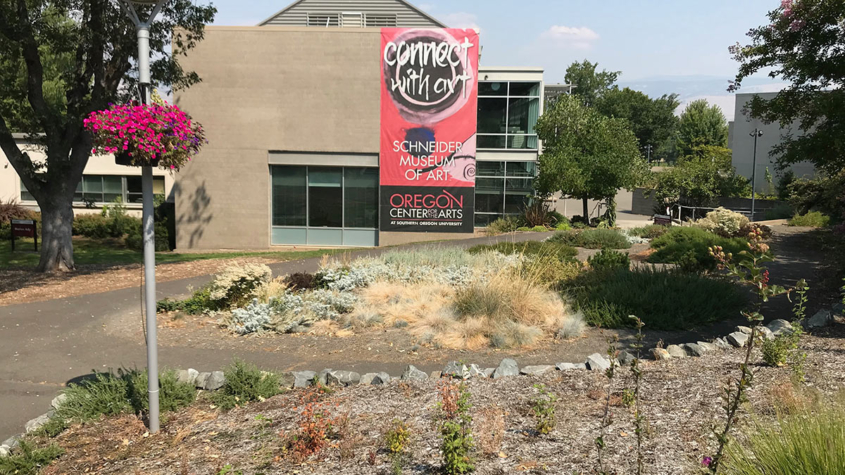
Yale University has a new partnership with SOU's Schneider Museum of Art

SOU to begin relationship with Yale School of Art

(Ashland, Ore.) — Southern Oregon University’s Creative Arts program and Schneider Museum of Art have entered into a new partnership with the prestigious Yale University School of Art. The agreement marks the first time the Yale School of Art has entered into a partnership with a public institution.

Yale alumni and graduating master of fine arts students will be able to apply for season-long residencies with teaching opportunities at the Schneider Museum of Art. The museum will provide housing and two $2,000 honorariums, one for a workshop and the second for a lecture. Yale will cover travel and a travel stipend for the alumni in residence.

The success of SOU’s Visiting Artist & Scholar in Teaching (VAST) residency program, which began in 2019, caught the attention of Yale University after previous VAST resident Maria de Los Angeles was hired by the university this year.

Scott Malbaurn, the Schneider Museum’s executive director, said the new partnership is a major opportunity for SOU’s Creative Arts program and its students, providing both educational opportunities and valuable personal and professional connections in the art world.

“Yale has been ranked the No. 1 graduate program in art for decades, and the partnership will give SOU students and faculty the chance to form meaningful relationships with the university,” Malbaurn said.

Under the new arrangement, residencies under SOU’s VAST program will be marketed by Yale to its alumni.

“Southern Oregon may not be the epicenter of the art world, but now that it has been vetted by Yale faculty, it’s seen as a great place to go and make work without the distraction of the city,” Malbaurn said.

Yale University art professor Sophie Naess will visit SOU this spring for an artist residency through the VAST program. She will not be teaching, but will conduct a workshop and lecture. Her visit will provide an opportunity for SOU to further showcase its programs and facilities to Yale.

-SOU-

SOU grad recognized for higher education research

SOU grad recognized for higher education research

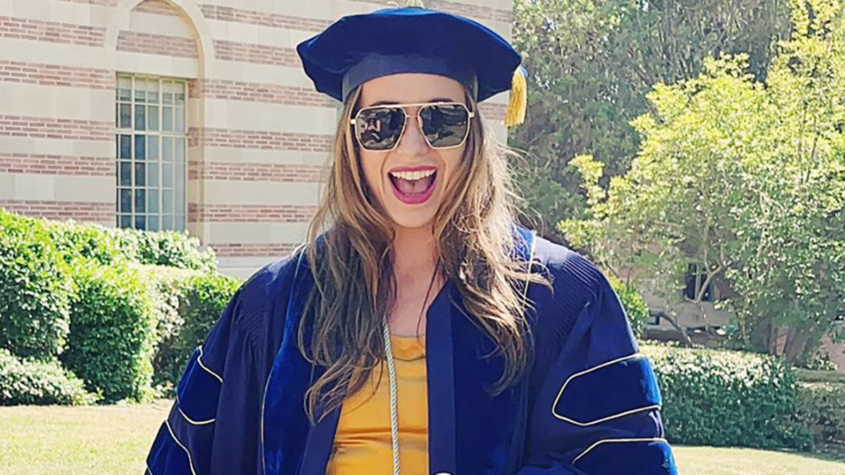
Sabrina Klein, a 2013 SOU graduate with a bachelor’s degree in communication, has earned recognition for her exceptional work in higher education research.

Klein received her Ph.D. from UCLA in 2022, and has been named the second-place winner in this year’s American Educational Research Association’s (AERA) Rural Education Special Interest Group (SIG) awards for her dissertation titled, “There’s More to the Story: An Organizational Analysis of Rurality and Higher Education.”

In her dedication, Klein expressed her gratitude toward her undergraduate advisor, Alena Ruggerio, and the communication department at SOU, citing them as the sources of inspiration and education that have helped shape her success as a researcher. She wrote that “I cherish every heartbeat I spent learning” from Ruggerio.

“The experiences and growth I had in the communication department at Southern Oregon University gave me the confidence and knowledge to articulate my thoughts and turn them into actionable narratives,” Klein said in the dedication. “Thank you to the entire communication department for the exceptional education I received, which has given me so many essential skills that have aided in every aspect of my life.”

She will be honored at the AERA Rural SIG awards ceremony in Chicago in April. The AERA, founded in 1916, is a national research society that aims to promote knowledge about education and use research to improve education and serve the public good. The Rural Education SIG, in particular, provides a forum for scholarly conversation about the lives of rural people, places and their schools through research.

After receiving her bachelor’s degree from SOU in communication and media studies, Klein earned master’s and doctorate degrees from UCLA in higher education and organizational change. She served two years as an academic mentor and three years as a graduate teaching fellow while at UCLA.

Her skills in higher education, qualitative research, nonprofit organizations, youth programs, fundraising, networking, and training make her a valuable asset to the education community.

Klein is described in her LinkedIn profile as an advocate and educator with a demonstrated history of working in the higher education industry, with skills including qualitative research, nonprofit organizations, youth programs, fundraising, networking and training.

Mark Tveskov's new book looks at the archaeology of war

New book on archaeology of war from SOU professor

SOU anthropology professor Mark Tveskov has a new book about the archaeology of war and battlefields, and how war and conflict are remembered and commemorated. The volume includes a chapter on Tveskov’s research on the archaeology of the Rogue River War and a discussion of the experiences of African Americans and the Indigenous Metis people of Canada during that war.

“Conflict Archaeology, Historical Memory and the Experience of War: Beyond the Battlefield” is an edited volume from Tveskov and Ashley Ann Bissonnette, an assistant professor of public health at Eastern Connecticut State University. It was published by University Press of Florida.

Essays from a variety of contributors go beyond forensic analyses of sites of conflict “to consider the historical memory, commemoration and social experience of war,” according to the publisher’s website. The writings challenge prevailing accounts of wars throughout the “settler colonialism” of North America.

Conflicts that are examined include the battle of Chikasha, King Philip’s War, the 1694 battle at Guadalupe Mesa, the Dakota-U.S. War of 1862 and a World War II battle on the Pacific Ocean island of Saipan. The Schenectady Massacre of 1690 and colonial posts staffed by Black soldiers also are analyzed.

“This book is a collection of studies that considers a question of the day: How does a society remember, critique, commemorate, and find significance in events, artifacts and places of conflict and war?” Tveskov and Bissonnette write in its introductory chapter.

Tveskov – who teaches in SOU’s Sociology and Anthropology Department – has focused his current research on the Rogue River War of the early 1850s, shell middens on the Oregon Coast and the African American logging community of Maxville in northeastern Oregon. He has conducted research in Iceland, New England, Southern California and Alaska.

He received his bachelor’s and master’s degrees at the University of Connecticut, and his doctorate at the University of Oregon. He is a member of the governor’s State Advisory Committee on Historic Preservation.

Tveskov and Bissonnette, his co-editor for the new book, both grew up in New England and received archaeological training at the University of Connecticut.

Klamath Outdoor Science School hires SOU graduate

Recent SOU grad hired at outdoor school

Natalie DiNenno, a fall 2022 graduate of SOU’s Master of Science in Environmental Education Program, has accepted a position as executive director of Klamath Outdoor Science School (KOSS.)

KOSS has a camp in Sun Pass State Forest, near Ft. Klamath and Jackson Kimball State Park, and provides outdoor school, summer camps and a wide range of other outdoor education programs throughout southern Oregon. Natalie will continue to reside in Ashland.

After growing up and attending college on the East Coast, Natalie made her way to the Northwest to pursue graduate studies at SOU.

“I was immediately captivated by the beauty of southern Oregon and the supportive network of environmental educators in this region,” Natalie says.

Students in SOU’s Master of Science in Environmental Education Program work to design an environmental education program and then implement it as their capstone project in the annual Fall in the Field outdoor classes for the region’s third- through eighth-grade students. The MSEE program is intended to prepare graduates for teaching and leadership positions at nature centers, museums, schools, government agencies and other organizations.

Natalie grew up outside of Philadelphia and received bachelor’s degrees in environmental studies and sociology from Williams College in Massachusetts. She has worked as a naturalist, camp counselor and administrator, and visited the Pacific Northwest for the first time while attending the Williams-Mystic Maritime Studies program.

She enjoys writing, making music or turning over rocks in streams to marvel at benthic macroinvertebrates in her spare time. She is passionate about providing immersive, place-based, experiential education for all students, of all ages and backgrounds.

Natalie is already busy in her new job with KOSS, scheduling fifth- and sixth-grade classes for spring and fall outdoor school, all grades for day camps and planning a wide range of summer programs. She is also hiring instructors and support staff for those camps.

For more information on KOSS’s programs and open positions, see the KOSS website. Natalie can be reached directly at 541-850-8218 or by emailing natalie.dinenno@klamathoutdoorschool.org.

New exchange program links SOU and Universidad Católica del Uraguay

SOU adds first exchange partner in Southern Hemisphere

Southern Oregon University in Ashland and the Universidad Católica del Uruguay (Catholic University of Uraguay) in Montevideo are launching a new student exchange partnership in 2023 that will be SOU’s first such arrangement in South America and the Southern Hemisphere.

Bilateral exchange programs, like the one developed between SOU and UCU, function as affordable study-abroad opportunities for participants. Exchange students pay their usual tuition and fee rates at their home university, while spending a semester or year abroad at the partner institution. SOU students keep their financial aid package intact while on exchange, creating opportunities for students of limited financial means to pursue international experiences.

Students on SOU’s Ashland campus will also benefit from the addition of Uruguayan students in the classroom. Exchange students visiting Ashland bring their unique perspectives, histories and cultures to enliven classroom discussions, group projects and creative showcases. UCU offers majors including business, communication, computer science, economics, nutrition, performing arts, psychology, recreation, sociology and visual arts, and exchange students are welcomed from across all fields of study.

SOU students applying to study at UCU in Montevideo will need to have at least a B1-level of Spanish language proficiency, and expect to immerse themselves in Spanish language through their coursework in Uruguay. Students may take courses such as Spanish language, Uruguayan Culture, Latin American and Uruguayan Thinking, or a service-learning course in addition to classes alongside UCU students in their areas of study.

“Uruguay is highly regarded internationally for its stances on environmental stewardship, sustainability, human rights, and democracy. It ranks highly as a safe destination for LGBT travelers,” says Ariel Bloomer, SOU’s Education Abroad advisor. “I’m excited about the diversity this location brings to our existing exchange portfolio, and what that means for cultural exchange opportunities on our campus.”

For SOU students interested in the exchange opportunity in Uruguay, or in other exchange destinations, the application deadline for fall exchanges is Feb. 15. All partners can be explored on the Office of International Programs page on Inside SOU, or at the upcoming Study Abroad Fair from 11 a.m. to 2:45 p.m. on Jan. 25 in the Stevenson Union, Room 323. Students can contact the Office of International Programs at studyaway@sou.edu.

Story by Ariel Bloomer, SOU Education Abroad advisor

New grant for prior learning credits

SOU receives state grant to provide “prior learning” credits

(Ashland, Ore.) — Southern Oregon University has received a one-time, $338,000 grant from the Oregon Higher Education Coordinating Commission to expand opportunities for students to receive academic credit for knowledge and skills gained through life experiences such as work or military service.

SOU’s current Credit for Prior Learning program was initiated in 2015 as an option in the university’s bachelor’s degree program in Innovation and Leadership, which has been popular among mid-career adult students. The HECC grant, which was awarded this fall, has expanded the prior learning program campus-wide, and it already has been adopted in other academic areas, including Business, Communication, Media & Cinema.

“Offering students the option of Credit for Prior Learning is a way to honor the skills and knowledge our students bring to the school even before they have started taking classes on our campus,” said Moneeka Settles, coordinator for the Innovation and Leadership program. “It benefits students, no matter their major, because it recognizes the wisdom they have gained on their own life path.”

Students’ proposals for Prior Learning credits must meet several criteria under SOU’s policy for the program. Students must produce a portfolio that supports evidence they have learned the course outcomes, then faculty members assess the portfolio on a pass, no-pass basis. Students can also earn Credit for Prior Learning through challenge exams and military credit. Credits for prior learning can make up no more than 25 percent of the credits required for graduation.

SOU is among five Oregon universities and 14 community colleges that received this year’s HECC grants for Credit for Prior Learning programs. The HECC awarded a total of $10 million for the programs, under the state’s Future Ready Oregon investment package to support education and training that may lead to employment and family-wage careers. The grants are for one year, but institutions can apply to renew them annually.

Future Ready Oregon, funded by the 2022 Legislature, prioritizes historically underserved and vulnerable communities by offering opportunities to receive college credit “for prior experience or skills gained outside of traditional higher education institutions.”

The HECC requires standards for prior learning programs, monitors their implementation and provides periodic reports on them to the legislature. The HECC, which adopted its own prior learning standards in 2014, tracks the types and number of Credits for Prior Learning that are awarded throughout the state each year.

-SOU-

SOU pathway programs receive state grant

SOU “pathway” programs for Latino/a/x youth get boost from state grant

(Ashland, Ore.) — Southern Oregon University’s pathway programs that introduce local Latino/a/x students to the promise of higher education have received funding that will allow them to rebuild toward pre-pandemic numbers and achievement rates.

The highly successful Pirates to Raiders program in the Phoenix-Talent School District and the Bulldogs and Hornets to Raiders programs in the Medford School District will be boosted by a $250,000 grant for the current academic year. The grant is from the Oregon Department of Education’s Latino/a/x & Indigenous Student Success program, funded by the 2019 Oregon Legislature. Pending legislative approval and measurable progress toward its goals, funding for the SOU programs will be renewable at up to $200,000 per year.

“These programs and others across the state will receive significant needed support, thanks to the Legislature’s recognition that systemic inequities that Latino/a/x and Indigenous students have historically experienced must be addressed,” said Rachel Jones, SOU’s director of outreach and engagement. “Our communities will benefit from the success of their students, and their future involvement throughout the region.”

The SOU grant focuses primarily on the Pirates, Bulldogs and Hornets to Raiders programs – located at Talent Middle School and Phoenix High School, and at Medford’s McLoughlin and Hedrick middle schools and North and South Medford high schools – but will also support other ongoing SOU programs and events, including Academia Latina, Latino Family Day and the Cesar Chavez Leadership Conference.

The Pirates to Raiders program began in 2011, Bulldogs to Raiders in 2015 and Hornets to Raiders in 2017. All are intended to open doors to Hispanic students by forming partnerships between students, their families, their school districts and SOU to ensure that the students remain on track for high school graduation and college. Family members make sure their students attend school, manage their studies and participate in events related to the program. The university and school district offer mentoring, financial aid information, transportation to program events and opportunities to learn about SOU. The students take appropriate college preparatory courses, attend two program-related events each year and sign contracts, promising to stay on track to graduate on time.

The programs had grown to a total of about 375 students prior to the COVID-19 pandemic, achieving a high school graduation rate that was 43 percent higher than Oregon’s Latino/a/x student benchmark, double the statewide rate of higher education enrollment for Latino/a/x students and 3.8 times the rate of four-year college enrollment. The programs suffered through the pandemic, hurt by online-only instruction and staffing challenges in their host school districts.

The grant will enable SOU to hire Latino/a/x community members to serve as project coordinators supporting Latino/a/x students at the host schools. The programs have previously relied on staffing from site coordinators hired by the host schools, but those positions have been overtaxed with other duties and have seen high turnover. The new project coordinators from SOU will work with the schools’ site coordinators to provide more consistent services to students, increased engagement with parents and additional attention to culturally responsive curricula and teaching.

Students in the pathway programs will have increased access to mentoring, tutoring and workshops, and the programs will be better able to offer incentives – such as field trips and awards – for students who are on track academically or achieve key academic milestones.

Parents will receive regular updates on their students’ progress, have another trusted contact at their children’s school and receive support completing applications for extracurricular programs, financial aid and college admission. A new Parent Leadership Team made up of the parents of Latino/a/x students in four local school districts – Phoenix-Talent, Medford, Central Point and Eagle Point – will be formed to better incorporate community input into the pathway programs.

SOU will also partner with the Southern Oregon Education Service District’s Migrant Education Program to establish Latino Student Unions at schools that host the pathway programs; the SOU English Department will design a Cultural Empowerment Institute to help secondary school teachers focus on anti-racist and culturally responsive teaching; and the university will provide various offsets for opportunities such as dual-credit courses, college credit for foreign language skills, college application fees for those with demonstrated financial need and college move-in expenses for a limited number of students.

-SOU-

Green Film School Alliance membership for SOU Digital Cinema

SOU Digital Cinema accepted as Green Film School Alliance member

(Ashland, Ore.) — Southern Oregon University’s Communication, Media & Cinema program is one of 16 higher education programs accepted for new membership in the Green Film School Alliance – a collaboration of leading film schools that have committed to industry-level sustainable production practices in their programs.

The GFSA announced its new member institutions on Wednesday, more than doubling its membership to 27 sustainability-minded schools. The organization’s membership now includes colleges and universities in seven states, four countries and three continents – with 10 of them also appearing on the Hollywood Reporter’s Top 25 Film School list for 2022.

“It’s an honor for our young program to be recognized among the most prestigious film schools in the U.S., and beyond,” said Andrew Gay, an associate professor of digital cinema at SOU and chair of the university’s Communication, Media & Cinema program. “This alliance is an outstanding example of  SOU’s commitment to sustainability, our Digital Cinema program’s focus on state-of-the-art production, and SOU’s top-tier opportunities for students.”

SOU’s Digital Cinema bachelor’s degree program launched in 2019 and drew acclaim earlier this year for its innovative, 12-credit spring immersion course called “The Crew Experience.” Student filmmakers in the course spend an entire term learning from faculty and experienced mentors on location for a significant film project.

This year’s Crew Experience cohort produced the short film “Eight & Sand” – which last week became the 25th student project anywhere in the world to be awarded the Environmental Media Association Green Seal. SOU is the sixth university to earn an EMA Green Seal, and the first undergraduate program on the West Coast to do so. The seal is presented to student productions that achieve sustainable production goals identified in the GFSA’s Production Environmental Actions Checklist (PEACHy) for young filmmakers.

Vincent Smith, Ph.D., the director of SOU’s Division of Business, Communication and Environmental Science, said the university’s Digital Cinema Program is a perfect example of hands-on, interdisciplinary learning experiences that have become a hallmark of the institution.

“I am regularly asked to explain why Business, Communication and Environmental Science are in one division,” Smith said. “This is just one of many good reasons why thinking across traditional disciplinary boundaries makes good sense for our future.”

The Green Film School Alliance and its member colleges and universities commit to common sustainability language, standards and tools to reduce waste and lower the carbon footprint of film productions. The organization is supported by the Sustainable Production Alliance and the Producers Guild of America Green.

-SOU-

McNair Scholars program accepting nominations

McNair Scholars: Nominate potential grad students

There is a reason why the coordinators of SOU’s McNair Scholars Program reach out to faculty members at about this time each year, seeking nominations of promising students to fill out the university’s next cohort of potential graduate school candidates. Most participants since the McNair program began at SOU in 2003 have stood out in the classroom and been steered by their professors toward the U.S. Department of Education program.

“If you know any undergraduate students … who you think may have academic potential and may want to go on to attend graduate school after completing a bachelor’s degree, please mention the program to the student and/or send an email to McNair@sou.edu to nominate that student to the SOU McNair Scholars Program,” said Naomi McCreary, coordinator of the SOU program.

Nomination emails should include the student’s name and email address. Students can be from any academic major, must have completed at least two terms of college and can enter the program as sophomores, juniors or early in their senior years. McCreary described McNair as “a specialized graduate school preparatory program of activities and instruction that the participants engage in over a minimum of a calendar year.”

The SOU program offers one-on-one guidance from faculty mentors as it helps participants complete their undergraduate degrees, enroll in graduate school and prepare for doctoral studies. Scholars complete an eight-week research internship in the summer, attend weekly seminars to help prepare them for testing and graduate school applications, and travel to national McNair conferences and graduate program visitations.

The program is named for Dr. Ronald E. McNair, who was a member of the Challenger space shuttle’s seven-person crew that met a tragic end in a 1986 explosion. As a tribute to his achievements, Congress and the McNair family in 1989 aformed the Ronald E. McNair Post-baccalaureate Achievement Program – administered by the U.S. Department of Education – to assist young people in both following McNair’s path and taking the initiative to chart their own courses.

The grant helps underrepresented and first-generation undergraduate students from low-income backgrounds to prepare for research-intensive doctoral programs. However, McCreary urged faculty members to nominate any students they feel may have the ability and desire to complete graduate school, and eligibility will be sorted out during the application process.

The McNair program at SOU received word in August that it has been renewed by the Department of Education for a new, five-year grant cycle. The SOU program has provided an intensive research experience and graduate school preparation to more than 160 students since its inception in 2003. Under the new grant, 28 students each year will share the prestige of being McNair Scholars.