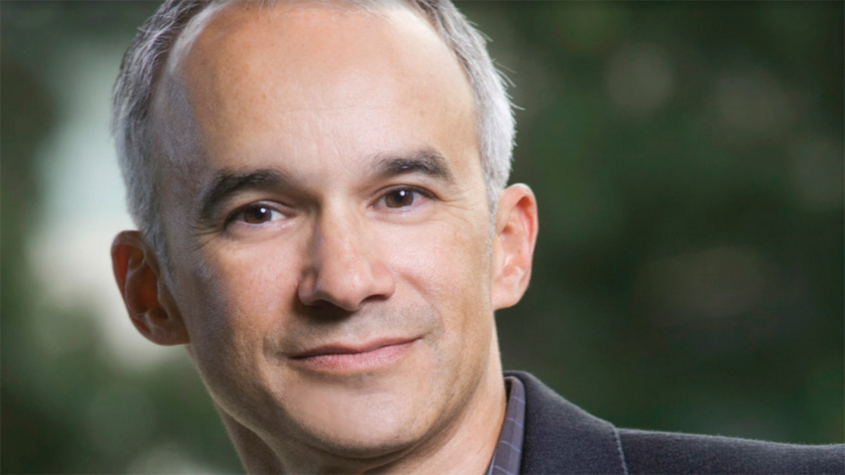
Civil rights theorist Ian Haney Lopez

Civil rights theorist Ian Haney Lopez to speak at SOU

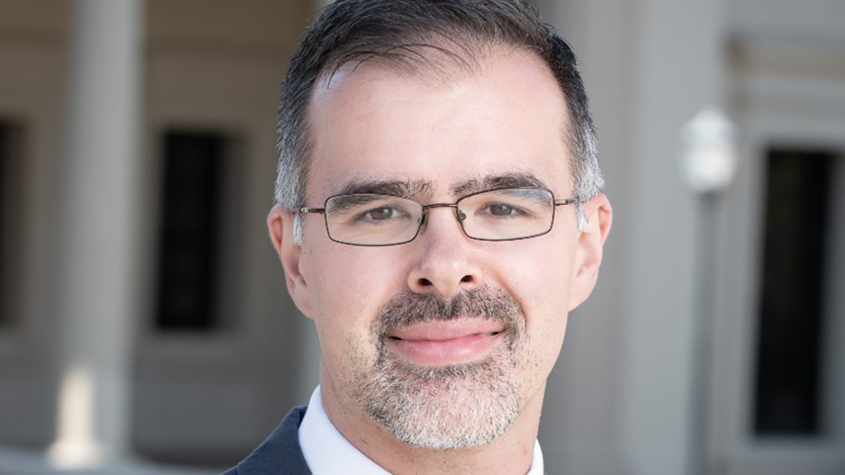
(Ashland, Ore.) — Southern Oregon University’s Office of Equity, Diversity and Inclusion has partnered with the Oregon Shakespeare Festival to bring celebrated law professor and civil rights theorist Ian Haney Lopez to the SOU campus for a public lecture on creating a free and equal multi-racial democracy.

Haney Lopez’s lecture, “Building a Broader ‘We’: Fusing Race and Class,” is part of the SOU Campus Theme lecture series, which is focusing this year on “identity.” The talk will be at 7 p.m. on Tuesday, May 16, in the Rogue River Room of SOU’s Stevenson Union.

The lecture centers on the question of how we can make the transition from a multi-racial population to a multi-racial democracy – and one that is “genuinely racially egalitarian.” Haney Lopez, a law professor at the University of California, Berkeley, will challenge audience members to examine their understanding of racism, and will discuss a model of racism that blends race and class to show the value of embracing a multi-racial society.

SOU’s Campus Theme lecture series is meant to create opportunities for students, faculty, staff and community members to engage in intellectually stimulating conversations. Each theme in the annual series – which began in the 2009-10 academic year – focuses on a specific concept and addresses big questions, enables deep understanding and broadens the intellectual horizons of participants.

The collaboration between SOU’s Office of EDI and the Oregon Shakespeare Festival is the result of ongoing conversations about how the two organizations can build community and serve as partners in the work of equity. Anyania Muse – OSF’s Interim Chief Operating Officer and Managing Director of IDEA People, Culture & Operations – was familiar with Haney Lopez, and proposed the community lecture partnership.

Haney Lopez teaches in the areas of race and constitutional law. His research centers around class, race and politics, and the ways in which class and race are often leveraged for gain – dividing society in ways that benefit the whole the least. He is considered one of the nation’s leading thinkers on how racism has evolved since the civil rights era.

He authored the 2014 book, “Dog Whistle Politics: How Coded Racial Appeals Have Reinvented Racism and Wrecked the Middle Class,” which examines how politicians exploit racism to ultimately support rule by the rich; and the 2019 book, “Merge Left: Fusing Race and Class, Winning Elections, and Saving America,about how the manipulation of coded racism evolved during the Trump era. He also wrote the books “White by Law and “Racism on Trial.

Haney Lopez holds an endowed chair as the Chief Justice Earl Warren Professor of Public Law at UC-Berkeley, and has been a visiting law professor at Yale, New York University and Harvard. He received his bachelor’s and master’s degrees in history from Washington University, a master’s degree in public policy from Princeton and a law degree from Harvard.

-SOU-
Alec Arellano lectures on democracy in Campus Theme series

Occidental College professor to lecture on identity of American democracy

Occidental College political scientist Alec Arellano will visit SOU this week as a guest speaker in the 15th anniversary edition of SOU’s “Campus Theme” lecture series. He will lecture on the identity of American democracy.

Arellano’s lecture, “Continuity and Change: John Dewey on Navigating Democratic Identity,” will be at 7 p.m. on Thursday, May 4, in Room 124 of the Art Building. It is free and open to the public.

SOU’s Campus Theme lecture series aims to create opportunities for students, faculty, staff and community members to engage in intellectually stimulating conversations. Each theme in the annual series – which began in the 2009-10 academic year focuses on a specific concept and addresses big questions, enables deep understanding and broadens the intellectual horizons of participants. This year’s theme is “identity.”

Arellano says that the United States faces a myriad of challenges, many of which go to the core of American democracy’s identity, as the country enters the 21st century’s second decade. The challenges concern the balance between holding fast to custom and tradition on the one hand, and innovating in response to new circumstances on the other.

The philosophy of John Dewey, who characterized democracy as not just a system of formal political institutions but also as a way of life requiring the possession and continual use of certain attitudes, furnishes a resource for thinking through this issue, Arellano says. Though Dewey’s short 1934 book, “A Common Faith,” is on its surface a proposal for a post-Christian spirituality that he wants to inaugurate, it also can be productively read as an account of some of the habits of character he regards as necessary for life in a modern democracy.

The SOU Campus Theme presentation will examine some of Dewey’s strategies for promoting those habits of character and consider their relevance for contemporary life.

Arellano is a political theorist specializing in Ancient Greek political thought, contemporary American political thought, and liberalism and its critics. He teaches courses on constitutional law and society, American politics and political theory in the Department of Politics at Occidental College.

Arellano received his Ph.D. in 2019 from The University of Texas at Austin. His work has been published in top journals in political science, and his current research examines Alexis de Tocqueville, John Stuart Mill and John Dewey’s views regarding the conditions under which critical, independent thought can be a salutary force for democratic politics. He is also the nephew of Bobby Arellano, a professor in SOU’s Department of Emerging Media and Digital Arts.

Precious Yamaguchi in Faculty Spotlight Podcast

Faculty Spotlight Podcast: SOU’s Precious Yamaguchi

Nicole Waehner receives tourism award

Recent SOU business grad earns tourism award

Nicole Waehner, who earned her bachelor’s degree in business with a concentration in tourism management last June from Southern Oregon University, was awarded the Rising Star Award at this month’s Oregon Governor’s Conference on Tourism in Portland.

The Rising Star Award recognizes an individual who is new to the tourism industry within the past five years and has shown leadership, commitment and a passion for Oregon tourism.

Waehner is currently the Sustainability and Accessibility Project Manager at Columbia Gorge Tourism Alliance. Her boss, network director Emily Reed, nominated her for the Rising Star Award.

“Don’t let her calm demeanor and professionalism keep you from missing her drive and passion, which you can also see early most mornings on the river in a rowing crew,” Reed said in the nomination.

“In addition, I would say that she has single-handedly battled the red tape and complexity of our visa system to fight her way to work another year here in Oregon (with all of our digits crossed in hopes of winning the visa lottery for next year).”

Waehner, in her first three months at the gorge alliance, promoted a new, coordinated transit pass – the Gorge Pass – at numerous live events, supported the “Ready Set Gorge” campaign on social media and helped to coordinate the Waterfall Corridor Accessibility Audit, turning the findings into a visitor-facing brochure and a formal report. She spearhead the creation of the Accessible Gorge website this winter, gathering information from visitor-facing businesses so travelers with disabilities know what to expect before arriving.

SOU business professor Pavlina McGrady, Ph.D., who worked with Nicole in a few courses last academic year, recognized Waehner’s passion for tourism management.

“Nicole proved to be an outstanding student in all of (the courses),” McGrady said. “She was intelligent, ambitious, hard-working and a leader in group projects. After graduation (or even before that), Nicole was eager to find an internship and apply her knowledge and passion.

“I know that she has put her heart into the work for the Columbia Gorge Tourism Alliance. She joined one of my classes as a guest speaker, sharing her professional journey and the amazing work she has done for a short period with the alliance, being an inspiration for the students in the class. She truly is a rising star, and I can’t wait to see what else she will accomplish!”

The Rising Star Award was presented to three recipients as part of the Oregon Travel and Tourism Industry Achievement Awards at the Oregon Governor’s Conference on Tourism, at Portland’s Oregon Convention Center.

The Oregon Tourism Commission (Travel Oregon) is a semi-independent state agency with a mission to inspire travel that uplifts Oregon communities. The organization collaborates with stakeholders to align as stewards of Oregon, working to optimize economic opportunity, advance equity, and respect the ecosystems, cultures and places that make Oregon unique. The organization supports the state’s $13.8 billion tourism industry and more than 117,360 tourism-related jobs.

SOU ROTC pays respect to Bataan Death March

SOU’s ROTC program honors WWII Bataan marchers

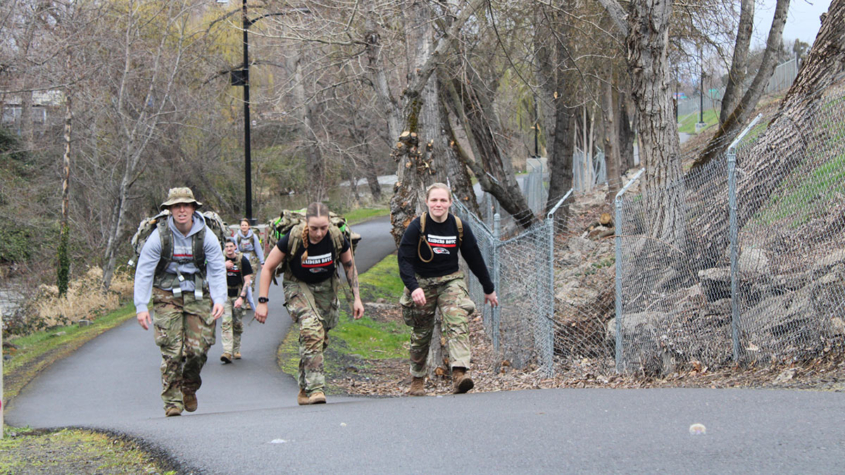
Southern Oregon University’s ROTC program paid respect to – and drew inspiration from – one of the most notorious incidents of World War II’s Pacific Theater when 19 cadets and cadre participated recently in the Bataan Memorial Death March 2023 – a 26.2-mile “ruck” with 35-pound backpacks from Central Point to the SOU campus.

SOU’s “Raider Company” of the U.S. Army ROTC chose the local route after coming up short on fund-raising to send participants to an annual Bataan event at the Army’s White Sands Missile Range in New Mexico. The local ruck, mostly along the Bear Creek Greenway, became a virtual counterpart to the New Mexico event – which bills itself as “26 miles of high desert, 26 miles of pure perseverance.”

“Twenty-six-point-two miles was the distance that was dictated by the Bataan Memorial Death March event and not chosen by SOU ROTC itself,” said SOU ROTC Cadet Maribett Malubay. “The cadets were inspired, and wanted to take on the challenge in order to honor those that did the 65-mile forced march on Bataan.”

The SOU cadets and cadre – ROTC instructors, staff and facilitators – also turned their efforts into a local benefit, by using canned food to reach their 35-pound ruck weight and then donating their load after the march to the SOU Student Food Pantry.

The historic Bataan Death March occurred after about 75,000 U.S. and Filipino soldiers surrendered to Japanese forces on April 9, 1942. Thousands died as they were marched for several days and about 65 miles through scorching Philippine jungles to confinement camps, where they suffered at the hands of their captors until 1945, when U.S. and Filipino forces recaptured the lost territory.

This year’s commemorative event at the SOU was the final term project for seniors in the ROTC program, who took responsibility for planning, coordination and preparation. They organized 6- to 12-mile training rucks each Friday for several weeks leading up to the March 19 main event, planned the route and arranged checkpoints where participants could stop for food, water or rest breaks.

“Through the blood, sweat and tears, Raider Company finished strong, with positive attitudes and huge smiles on their faces,” Cadet Malubay said.

All 19 cadets and cadre who signed up for the voluntary event completed the 26.2-mile course – all but two of them completing the marathon distance for the first time.

Friday Science Seminar speaker discusses zebrafish in study of neurological disease

Friday Science Seminar: What can we learn from a fish?

Michael Johnson, Ph.D., an associate professor of chemistry at the University of Kansas and developer of electroanalytical methods for the study of Parkinson’s and other neurological diseases, will be the guest speaker on March 10 for SOU’s Friday Science Seminar.

The lecture, at 3:30 p.m. in Room 151 of the SOU Science Building, is titled, “What Can We Learn From a Fish? Zebrafish as a model of neuronal function and disease.” The presentation is part of the SOU STEM Division’s Friday Science Seminars program, which offers events on topics ranging from astronomy to computer science to biochemistry.

Johnson studies neurological diseases, such as Parkinson’s, using zebrafish as a model organism. He will discuss the use of fast-scan cyclic voltammetry, an electrochemical technique used to monitor neurochemicals in living organisms, to measure the effects of zinc ion on dopamine release and uptake in zebrafish brains. The method allows for the detection of sub-second changes in dopamine levels.

Zebrafish were used first at the University of Oregon for the study of development, but have become recognized as a valuable tool to study neuronal function.

Johnson will share his research in two areas during his SOU talk. In the first project, his team has developed a method to apply zinc ion with sub-second precision in zebrafish brains to measure the immediate effect on dopamine release and uptake. They have also identified differences in how zinc ion affects dopamine release and uptake in zebrafish treated with rotenone, a model of Parkinson’s disease.

In the second project, Johnson’s team has adapted a method to measure oxytocin, a nonapeptide with various functions.

Johnson received his bachelor’s degree in chemistry from the United States Air Force Academy in Colorado Springs. He later earned his master’s degree in analytical chemistry from the University of Colorado, Denver, and his Ph.D. from the University of Virginia. Johnson joined the faculty at the University of Kansas in 2005, where he has focused on developing electroanalytical methods for the study of neurological disease.

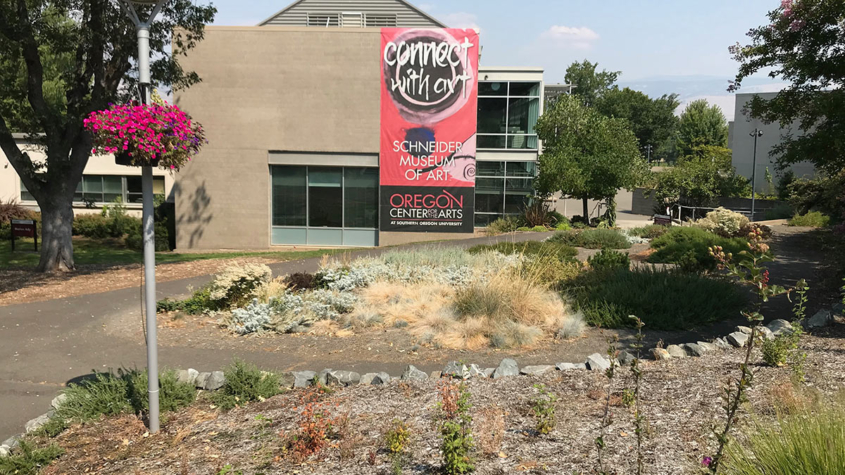
Yale University has a new partnership with SOU's Schneider Museum of Art

SOU to begin relationship with Yale School of Art

(Ashland, Ore.) — Southern Oregon University’s Creative Arts program and Schneider Museum of Art have entered into a new partnership with the prestigious Yale University School of Art. The agreement marks the first time the Yale School of Art has entered into a partnership with a public institution.

Yale alumni and graduating master of fine arts students will be able to apply for season-long residencies with teaching opportunities at the Schneider Museum of Art. The museum will provide housing and two $2,000 honorariums, one for a workshop and the second for a lecture. Yale will cover travel and a travel stipend for the alumni in residence.

The success of SOU’s Visiting Artist & Scholar in Teaching (VAST) residency program, which began in 2019, caught the attention of Yale University after previous VAST resident Maria de Los Angeles was hired by the university this year.

Scott Malbaurn, the Schneider Museum’s executive director, said the new partnership is a major opportunity for SOU’s Creative Arts program and its students, providing both educational opportunities and valuable personal and professional connections in the art world.

“Yale has been ranked the No. 1 graduate program in art for decades, and the partnership will give SOU students and faculty the chance to form meaningful relationships with the university,” Malbaurn said.

Under the new arrangement, residencies under SOU’s VAST program will be marketed by Yale to its alumni.

“Southern Oregon may not be the epicenter of the art world, but now that it has been vetted by Yale faculty, it’s seen as a great place to go and make work without the distraction of the city,” Malbaurn said.

Yale University art professor Sophie Naess will visit SOU this spring for an artist residency through the VAST program. She will not be teaching, but will conduct a workshop and lecture. Her visit will provide an opportunity for SOU to further showcase its programs and facilities to Yale.

-SOU-

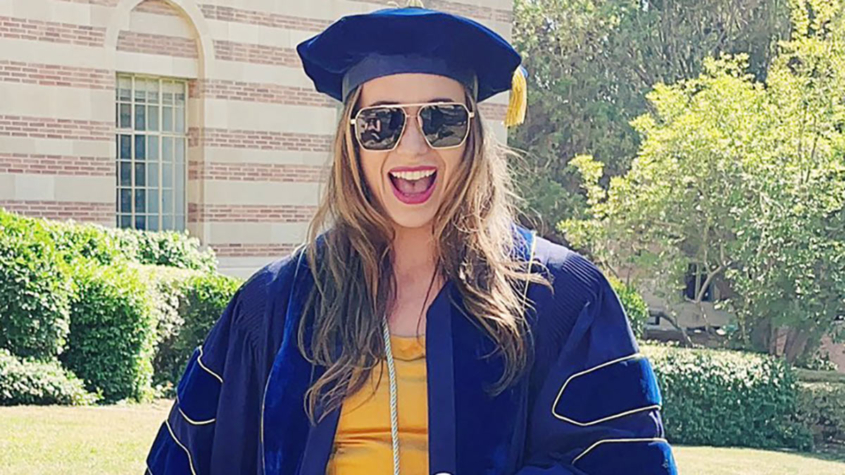
SOU grad recognized for higher education research

SOU grad recognized for higher education research

Sabrina Klein, a 2013 SOU graduate with a bachelor’s degree in communication, has earned recognition for her exceptional work in higher education research.

Klein received her Ph.D. from UCLA in 2022, and has been named the second-place winner in this year’s American Educational Research Association’s (AERA) Rural Education Special Interest Group (SIG) awards for her dissertation titled, “There’s More to the Story: An Organizational Analysis of Rurality and Higher Education.”

In her dedication, Klein expressed her gratitude toward her undergraduate advisor, Alena Ruggerio, and the communication department at SOU, citing them as the sources of inspiration and education that have helped shape her success as a researcher. She wrote that “I cherish every heartbeat I spent learning” from Ruggerio.

“The experiences and growth I had in the communication department at Southern Oregon University gave me the confidence and knowledge to articulate my thoughts and turn them into actionable narratives,” Klein said in the dedication. “Thank you to the entire communication department for the exceptional education I received, which has given me so many essential skills that have aided in every aspect of my life.”

She will be honored at the AERA Rural SIG awards ceremony in Chicago in April. The AERA, founded in 1916, is a national research society that aims to promote knowledge about education and use research to improve education and serve the public good. The Rural Education SIG, in particular, provides a forum for scholarly conversation about the lives of rural people, places and their schools through research.

After receiving her bachelor’s degree from SOU in communication and media studies, Klein earned master’s and doctorate degrees from UCLA in higher education and organizational change. She served two years as an academic mentor and three years as a graduate teaching fellow while at UCLA.

Her skills in higher education, qualitative research, nonprofit organizations, youth programs, fundraising, networking, and training make her a valuable asset to the education community.

Klein is described in her LinkedIn profile as an advocate and educator with a demonstrated history of working in the higher education industry, with skills including qualitative research, nonprofit organizations, youth programs, fundraising, networking and training.

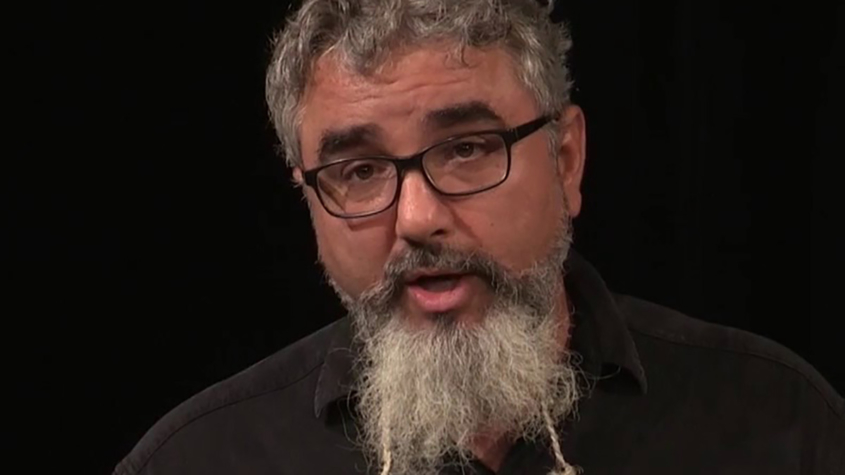
Mark Tveskov's new book looks at the archaeology of war

New book on archaeology of war from SOU professor

SOU anthropology professor Mark Tveskov has a new book about the archaeology of war and battlefields, and how war and conflict are remembered and commemorated. The volume includes a chapter on Tveskov’s research on the archaeology of the Rogue River War and a discussion of the experiences of African Americans and the Indigenous Metis people of Canada during that war.

“Conflict Archaeology, Historical Memory and the Experience of War: Beyond the Battlefield” is an edited volume from Tveskov and Ashley Ann Bissonnette, an assistant professor of public health at Eastern Connecticut State University. It was published by University Press of Florida.

Essays from a variety of contributors go beyond forensic analyses of sites of conflict “to consider the historical memory, commemoration and social experience of war,” according to the publisher’s website. The writings challenge prevailing accounts of wars throughout the “settler colonialism” of North America.

Conflicts that are examined include the battle of Chikasha, King Philip’s War, the 1694 battle at Guadalupe Mesa, the Dakota-U.S. War of 1862 and a World War II battle on the Pacific Ocean island of Saipan. The Schenectady Massacre of 1690 and colonial posts staffed by Black soldiers also are analyzed.

“This book is a collection of studies that considers a question of the day: How does a society remember, critique, commemorate, and find significance in events, artifacts and places of conflict and war?” Tveskov and Bissonnette write in its introductory chapter.

Tveskov – who teaches in SOU’s Sociology and Anthropology Department – has focused his current research on the Rogue River War of the early 1850s, shell middens on the Oregon Coast and the African American logging community of Maxville in northeastern Oregon. He has conducted research in Iceland, New England, Southern California and Alaska.

He received his bachelor’s and master’s degrees at the University of Connecticut, and his doctorate at the University of Oregon. He is a member of the governor’s State Advisory Committee on Historic Preservation.

Tveskov and Bissonnette, his co-editor for the new book, both grew up in New England and received archaeological training at the University of Connecticut.