

CRL Student Fellows program celebrates first year
Southern Oregon University celebrated the success of its Community Resilience and Leadership Student Fellows (CRL) program in an event last week that brought together students, community partners, businesses, nonprofit organizations and elected officials to recognize what has been achieved in the program’s inaugural year and look ahead to what comes next. The evening’s keynote speaker, Jonna Papaefthimiou from Gov. Tina Kotek’s office, set the wider context for the importance of resilience across Oregon and the role that partnerships, leadership and community action can play in preparing for future challenges.
Dinner for the event was provided by Rogue Food Unites, an Ashland nonprofit that formed in 2020 in response to the Almeda and Obenchain wildfires and the COVID-19 pandemic.
The celebration highlighted the success of the Institute for Applied Sustainability’s CRL Student Fellows program, which provides students with learning opportunities beyond the classroom. Students in the initial cohort worked on real-world challenges alongside community partners, building leadership skills, professional connections and practical experience. Partnerships extended well beyond campus, including collaboration with the city of Coos Bay and engagement in Portland, Coos Bay, Butte Falls, Salem and across Oregon.
The experience provided the CRL student fellows an opportunity to take what they had learned and apply it in very different communities and settings.
“The last week of field school took us to the Oregon Coast, where we had the opportunity to apply what we had learned in a completely new setting with different constraints, risks and community priorities,” student fellow Liora Solomon said.
The experience also broadened students’ understanding of what community resilience can mean.
“I began to understand more about the wide variety of actions that fit into the mold of ‘community resilience,’” said CRL student fellow Finch Drake. “It isn’t just preparing for disaster, although that is an incredibly important aspect of it. Community resilience can also be the act of bringing people together and healing their souls.”
The success of the inaugural cohort demonstrated what is possible when universities and communities work together.
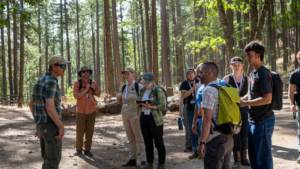 “What has been so exciting about this program is seeing students realize that they don’t have to wait until after graduation to make a difference,” said SOU Economics professor Bret Anderson, who is also the faculty and academic director of Institute for Applied Sustainability. “They can bring their ideas, energy and skills to real community challenges right now. That’s what applied learning should look like, and this program is just the beginning.”
The CRL program builds on the momentum created through SOU’s Institute for Applied Sustainability (IAS), established with the support of Lithia Motors & Driveway. That investment provided the foundation for bringing students, faculty, staff and community partners together around applied sustainability and resilience. U.S. Senators Jeff Merkley and Ron Wyden also supported the program by helping to secure federal funding that has enabled the Community Resilience and Leadership Student Fellows program to grow from an idea into an opportunity for students and communities across Oregon.
The one-year CRL fellowship is a cornerstone of the institute’s Living Laboratory concept, and offers a total of 12 credit hours plus monetary stipends to students who are selected for the program. It consists of a spring Local Innovation Lab course that meets two hours per week and offers four academic credit hours; a summer Field School that offers eight credit hours and meets for six weeks beginning in early August; and fall options that include internships, peer mentoring and capstone research projects.
Last week’s event was a celebration, but the broader message was that this work is just getting started. CRL is an invitation to students, businesses, community nonprofits, local governments and elected officials to work alongside SOU on the challenges facing the region’s communities. By connecting education with real projects, real partners and real needs, the program is creating opportunities for students to learn through doing – and developing southern Oregon’s future workforce. The next chapter is about expanding those partnerships, creating more opportunities for students and continuing to turn ideas about resilience into action.

