SOU computer scientist Bernadette Boscoe receives Sloan grant

SOU computer scientist receives Sloan grant for “tacit knowledge” research

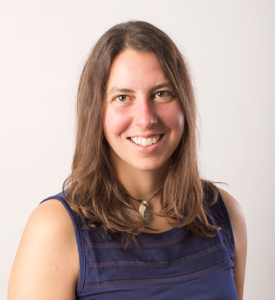
(Ashland, Ore.) — Bernadette Boscoe, an assistant professor in the Computer Science Department at Southern Oregon University, recognizes a shared need in fields as dissimilar as astronomy, environmental science and violin acoustics, and a new grant will pay for research that may benefit those and other academic disciplines.

Boscoe has received a $250,000 grant from the Alfred P. Sloan Foundation that will fund her study of tacit knowledge in research settings – gathering, storing and retrieving the unspoken practices of academic teams that sometimes are lost when a project is disrupted or ends. She will use a Large Language Model (LLM) of artificial intelligence to archive the protocols of scientific groups researching environmental science at SOU, astronomy at UCLA and violin acoustics at Cornell University.

“When students, postdocs, researchers or even professors leave a project or lab, much of the tacit, hands-on training practices are lost, because they are not documented,” Boscoe said. “With the rapid advances of LLMs in AI, we now have more computational capabilities to keep track of tacit knowledge, as well as query it in a natural language form.”

She said that mentorships are the main training method to transfer knowledge within most academic research groups – professors and researchers onboard new members to their groups, and train them to do research.

“AI can be used to have researchers rethink how they onboard newcomers, and consider how important tacit knowledge is in continuing collaborations and research over time,” Boscoe said.

She is using Retrieval-Augmented Generation (RAG), an AI framework that pairs an LLM with an information retrieval system to improve accuracy and relevance of resulting data. She is working with SOU computer science graduate Chandler Campbell to build the project’s RAG-LLM tool, called AquiLLM – named after the constellation Aquila.

Boscoe is a computer and information scientist who builds and researches infrastructures and tools to help domain scientists do their work. She earned a bachelor of fine arts degree in painting from the Pratt Institute in New York, an associate degree in computer science from Northampton Community College in Pennsylvania, a master’s degree in mathematics from California State University-Northridge, and a Ph.D. in information science from UCLA.

The research that will be funded over the next year by the Sloan Foundation grant is an extension of her previous work, with the addition of artificial intelligence frameworks.

The grant will fund the development of AquiLLM tools to be used at SOU, UCLA and Cornell, so that each research team can store and query its own tacit knowledge over time. It will also provide funding to students who are participating in the research projects at the three universities.

This material is based upon work supported by Alfred P. Sloan Foundation under Grant No.(APSF grant number G-2024-22720).

The Sloan Foundation is a not-for-profit, mission-driven, grant-making institution dedicated to improving the welfare of all through the advancement of scientific knowledge. It was established in 1934 by Alfred Pritchard Sloan Jr., then-president and chief executive officer of the General Motors Corporation. It provides grants in four broad areas: direct support of research in science, technology, engineering, mathematics and economics; initiatives to increase the quality, equity, diversity and inclusiveness of scientific institutions and the science workforce; projects to develop or leverage technology to empower research; and efforts to enhance and deepen public engagement with science and scientists.

-SOU-

IAS sustainability conference SOU Ashland

Sustainability conference at SOU builds regional collaboration

(Ashland, Ore.) — The initial conference of Southern Oregon University’s Institute for Applied Sustainability attracted about 85 sustainability professionals from southern Oregon and northern California this month for two days of hands-on learning, actionable insights and connection-building in Ashland and nearby venues.

The invitation-only conference on Oct. 3 and 4 was open to those in agencies and organizations from the Pacific Coast to Klamath Falls, and from Roseburg to Redding, who are spearheading sustainability efforts in their areas. The event was intended to pull together those leaders to create a dynamic network of individuals and inspired organizations to advance sustainability initiatives throughout the region.

“This conference was valuable to those in attendance, and to those who live in southern Oregon and northern California,” said Vincent Smith, executive director of SOU’s Institute for Applied Sustainability and dean of the School of Science and Business. “A lot of ground-breaking knowledge was shared, and just as important, bonds and connections were created that will benefit us all as we work to promote sustainability efforts and mitigate the effects of a changing climate.”

Programs at the conference were meant to promote regional collaboration and support around existing and future sustainability projects. Participants gained practical knowledge, had opportunities to highlight success stories and promote innovation, and strengthened regionally-focused partnerships.

The first day centered on keynote speeches, workshops and networking opportunities, with topics ranging from funding to using artificial intelligence in climate-action planning, and from the effects of change management on the electrical grid to leveraging diversity to support sustainability. The keynote speaker was Auden Schendler, the senior vice president for sustainability at Aspen One in Colorado, who champions solutions to the climate crisis through activism, movement building and replicable projects. Another 14 presenters served as guest speakers on a variety of topics. Most of the day-one events were held on the SOU campus, other than an evening reception at the Ashland Hills Hotel.

Community outings and connection-building were the second-day focus, with opportunities for outdoor adventures, art and dining. Options included mountain biking with Ashland Mountain Adventures, rafting with Indigo Creek Outfitters, a food and wine tour with Rogue Trotter, and a tour and matinee with the Oregon Shakespeare Festival. All of the day-two activities were organized and sponsored by Travel Southern Oregon, a local tourism marketing nonprofit.

The conference was hosted by SOU’s Institute for Applied Sustainability and a committee that included faculty members Dee Fretwell and Pavlina McGrady, IAS coordinator Kira Welch and student Jenny Chynoweth. Sponsors included Travel Southern Oregon, Motif Event Rentals, Shooting Star Nursery and BBG Creations.

The SOU Institute for Applied Sustainability was created in fall 2022 as part of an historic, $12 million gift to SOU from Lithia Motors and its GreenCars division. The two largest elements of the gift are a $5 million scholarship fund and $4 million that established the IAS – which collaborates with Lithia on projects including the sustainability conference, an academic credential in corporate sustainability and a national sustainability demonstration site.

The institute celebrated the start of its second year in January with the official launch of its IAS Innovation Fund, which provides micro-grants for forward-thinking projects by SOU faculty and staff. Those projects have included sustainable landscape upgrades on campus, regional partnerships, a global exchange program, faculty research and student internships.

Learn more about the Institute for Applied Sustainability and its Innovation Fund.

-SOU-

candidates forum SOU

SOU class to host candidate forum for local political races

(Ashland, Ore.) — Political Science students in Southern Oregon University’s upper division course on political campaigns will partner with SOU’s Office of Government Affairs to host a forum for candidates in all contested races for the Ashland City Council and the Jackson County Board of Commissioners.

The forum, which is free and open to the public, will be from 11 a.m. to 12:30 p.m. on Wednesday, Oct. 16, in the Rogue River Room of SOU’s Stevenson Union. Light refreshments will be served.

Questions for the candidates have been generated by students in the political science class, through research on key issues in the community. The goal of the event is to help educate members of the southern Oregon community about issues and areas of civic life that may impact the region in general or local residents individually.

Students in the class hope to give the candidates in local races an opportunity to discuss their positions and explain how they intend to support a good quality of life in Ashland and Jackson County.

“Political Campaigns” (Political Science 324) is a four-credit course that introduces students to modern American elections and the complex processes that influence them. The hybrid in-person and online course, taught by SOU General Counsel Rob Patridge, examines the basic techniques of organizing and implementing a political campaign. It explores the relationships between candidates and the media, the psychology of political oratory, campaign finance, grassroots organizing and use of the Internet.

For more information on the course or on the Oct. 16 candidates forum, contact Patridge at patridger@sou.edu

-SOU-

SOU Indigenous Peoples Day

Indigenous Peoples Day to be celebrated over two days at SOU

(Ashland, Ore.) — Southern Oregon University’s annual Indigenous Peoples Day celebration will return to campus for a weekend full of activities on Oct. 19 and 20, from Native dancers to guest speakers to lunches of salmon on Saturday and Indian tacos on Sunday.

Indigenous Peoples Day celebrates the historic, cultural and present-day influence of Native Americans. The theme of this year’s celebration is “Honor the past, empower the present, inspire the future.”

SOU has formally observed Indigenous Peoples Day since 2017, after a student and the university’s Diversity and Inclusion Oversight Committee petitioned for the change a year earlier. The state of Oregon began recognizing the holiday in 2021.

This year’s celebration – the seventh at SOU – will begin at 10:30 a.m. on Saturday, Oct. 19, with a “grand entry” procession of Native American dancers at the university’s Stevenson Union. A period of “welcoming” will begin at 11 a.m., followed by a $10 salmon bake lunch (cash only) at noon. Guest speakers and open sharing of songs, dances and stories will be from 1 to 4 p.m.

The celebration will continue on Sunday, Oct. 20, with guest speakers and open sharing throughout the day, from 10:30 a.m. to 4 p.m., and Indian tacos and frybread offered by SOU’s Native American Student Union (cash only).

An Indigenous artisans market and a variety of other activities will be held during both days of the celebration.

Dancers are invited to join Saturday’s grand entry procession, and Native American regalia is encouraged. More information about the celebration is available from Kenwani Kravitz, SOU’s Native Nations Liaison, at kravitzk@sou.edu or (541) 552-6937.

Hosts of SOU’s Indigenous Peoples Day celebration include the university, its Office of Equity, Diversity & Inclusion, the Native Raiders office and the Native American Student Union.

-SOU-

virtual reality biology SOU Ashland

Seminar to show benefits of a virtual reality and real-world teaching combination

(Ashland, Ore.) — Two biologists and academic administrators from Arizona State University will present a new method of teaching biology that combines immersive virtual reality with highly structured classroom activities when the Southern Oregon University Biology Department hosts this year’s inaugural Friday Science Seminar on Oct. 11.

The presentation, from 3:30 to 5 p.m. in Room 151 of the SOU Science Building, is free and open to the public. The Friday Science Seminars program is a feature of the SOU School of Science and Business that offers community events on topics ranging from astronomy to computer science to biochemistry.

Michael Angilletta and John VandenBrooks, who both work in ASU’s innovative EdPlus program, will demonstrate in Friday’s presentation how virtual reality can be used to teach about biological concepts and skills, and will show how students taught with the new curriculum have excelled when compared to peers in conventional classrooms. The biology teaching model is called Dreamscape Learn.

“This new curriculum enables students to enter a fictional world, where an artificial intelligence has created an intergalactic wildlife sanctuary to preserve endangered ecosystems from across the galaxy,” promotional material for the Friday Science Seminar says. “In each learning module, students become the heroes of a story – discovering, investigating and solving novel yet realistic problems.”

The storyline continues as students apply their virtual reality experiences to their work in the classroom.

Students who are taught biology concepts at ASU in the Dreamscape Learn format have been almost twice as likely to earn “A” grades on their assignments – scores of 90 to 100 percent – than were other students who were taught the same concepts with traditional teaching methods, according to Angilletta and VandenBrooks. They say their research shows potential benefits of using emerging technologies and a compelling narrative structure to enrich science education.

Angilletta, an associate dean of Learning Innovation in ASU’s EdPlus program, earned his Ph.D. in Ecology & Evolution from the University of Pennsylvania. VandenBrooks, an associate dean of Immersive Learning in the EdPlus program, received his Ph.D. in geology and geophysics from Yale University.

The EdPlus program focuses on the design and delivery of digital teaching and learning models to remove obstacles and improve the likelihood of student success.

SOU assistant professor Jacob Youngblood, Ph.D., is hosting this week’s Friday Science Seminar.

-SOU-

Alumni Awards SOU Ashland

SOU alumni receive awards for their work and service

(Ashland, Ore.) — A Colorado State University professor who is helping develop the Periodic Table of Food; the founder and executive director of a nonprofit that protects Siskiyou backcountry trails; a former La Clinica CFO and current equity policy strategist with the Oregon Health Authority; and the CEO of a Beaverton-based computer software company and his wife, the president of a property investment and management firm, have been recognized as this year’s Southern Oregon University alumni award winners.

The award recipients who were chosen by the SOU Alumni Association Board of Directors are Matt and Ella Essieh for the Distinguished Alumni Award; Jessica Prenni, Ph.D., for the Alumni Excellence in Education Award; Angelica Ruppe for the Stan Smith Alumni Service Award; and Gabe Howe for the Outstanding Young Alumni Award.

The five SOU alumni will be presented their awards at an 11:30 a.m. luncheon on Thursday, Oct. 10, in the Stevenson Union’s Rogue River Room. The event is part of this year’s homecoming celebration.

Essieh
The Distinguished Alumni Award is presented annually by the university and the SOU Alumni Association to recognize someone whose personal and professional achievements have significantly benefited humankind and brought distinction to the university. This year’s honorees are Emmanuella Essieh, who earned her bachelor’s degree at SOU in 1982, and her husband Matt Essieh, who earned his bachelor’s degree in 1982 and his Master’s in Business Administration in 1983. Emmanuella is cofounder and president of KMJ Asset Management in Portland, a residential property investment and management firm. Matt is the CEO of Beaverton’s EAI Information Systems, a financial services company that helps banks, brokers and insurance companies track and manage their investments. The couple’s professional success is balanced by their personal commitment to support youth from Sampa, Ghana, through their nonprofit foundation. They also work to assist students in Ghana and Nigeria to obtain a university education in Africa or the U.S.

Prenni
The Alumni Excellence in Education Award recognizes career achievement in education, service to community and commitment to SOU. This year’s winner of the award, Jessica Prenni, received her bachelor’s degree in chemistry from SOU in 1998 and her Ph.D. in analytical chemistry in 2002 from the University of Colorado-Boulder. She is a professor in the Department of Horticulture and Landscape Architecture at Colorado State University, where her research focuses on using mass spectrometry to address issues in food and crop safety, and to answer questions about the environmental factors that impact food composition. She is part of a global initiative to develop the Periodic Table of Food, a reference database on the composition and function of the most important foods worldwide.

Ruppe
The Stan Smith Alumni Service Award recognizes alumni who have demonstrated an outstanding commitment to the community and service to people. The award this year goes to Angelica Ruppe, who received her master’s degree at SOU in 1986. Angelica attended SOU in the 1980s as part of the Amistad student exchange program after earned her bachelor’s degree at the Universidad de Guanajuato in Mexico. She landed a position after graduating from SOU as the chief financial officer of La Clinica, a nonprofit health care provider in southern Oregon. She left the organization in 2017 and spent two years in Tanzania, working with women and children who were at-risk or living with disabilities. She is currently an equity policy strategist with the Oregon Health Authority, assuring healthcare access to those in need.

Howe
The Distinguished Young Alumni Award is presented to a recent university graduate who has demonstrated distinction in career, civic involvement or both. This year’s recipient of the award is Gabriel Howe, who received his bachelor’s degree in English at SOU in 2012. Gabe is founder and executive director of Siskiyou Mountain Club, a nonprofit organization that grew out of his capstone project at SOU. The organization seeks to restore, maintain and promote primitive trails in the Siskiyou backcountry. Gabe and the organization’s volunteers have restored 250 miles of trails and managed another 400 miles since 2010. He is committed to keeping trails from disappearing from the remote corners of southwest Oregon and northwest California.

-SOU-

shanell sanchez SOU Ashland

SOU faculty member publishes book on consequences of discrimination

(Ashland, Ore.) — Shanell Sanchez, an associate professor in the Criminology and Criminal Justice Department at Southern Oregon University, is co-editor of a new book on the causes and consequences of discrimination against vulnerable populations.

“Exploitation and Criminalization at the Margins: The Hidden Toll on Unvalued Lives” was published by Rowman & Littlefield, a well- respected independent publisher of U.S. academic titles.

The book is co-edited by Sanchez and Taryn VanderPyl, an associate professor of Criminal Justice Sciences at Western Oregon University, with chapters contributed by each of the editors and 18 others. It is divided into four parts – Value and Risk, Lived Experience, Immigration, and Power and Oppression – and a total of 15 chapters.

It examines discrimination against children, women, people of color, immigrants and others who are systemically devalued. The book’s contributors explore bias from institutions and those in positions of authority, in the context of policing and criminal justice, sex trafficking, intimate partner violence, immigration, disability, politics, substance abuse and food insecurity.

Chapter topics range from food apartheid and the criminalization of food insecurity, to stigmatizing and labeling Mexican immigrants, to the normalization of hate.

“VanderPyl and Sanchez’s edited volume brings to the forefront the complex realities for people entangled in the criminal legal system and other systems of injustice,” Kimberly Kras, an associate professor in the School of Public Affairs at San Diego State University, said in a review of the book. “Looking behind the scenes on topics including policing and prisons, education, media, immigration, and political power and oppression, the authors illuminate the subtexts of structural oppression.

“By uplifting voices of those with lived experience, this collection reveals the undervalued humanity of people who cause harm and yet are also harmed,” Kras said. “These stories-as-scholarship evoke the empathy and empowerment needed to change our notions about whose life is most valued – and encourages actions to transform the system.”

Sanchez joined the SOU Department of Criminology and Criminal Justice faculty in 2016, and served previously as an assistant professor of criminal justice at Colorado Mesa University, from 2013 to 2016. She received both her Ph.D. and master’s degree in sociology from the University of Nebraska-Lincoln, and her bachelor’s degree in criminal justice from the University of Northern Colorado.

Her teaching and research areas of interest include crime and deviance, social change, comparative crime, social inequality, qualitative methods, latino/a immigration, education and society, mass media, criminology, juvenile justice and delinquency, and minority health and illness.

VanderPyl has served on the faculty at WOU since 2019. She received her Ph.D. in special education and juvenile justice from Claremont Graduate University, her master’s degree in special education from Arizona State University and her bachelor’s degree in business administration from Northern Arizona University. Her research interests include interventions and legislation that pertain to juvenile and adult corrections, and that affect reentry and recidivism.

-SOU-

SOU plans forums to kick off facilities master plan

(Ashland, Ore.) — Southern Oregon University’s 10-year update to its Campus Facilities Master Plan is underway, and the university is seeking input from both campus and the community before the plan goes before the Ashland City Council for final approval next spring. The first two opportunities are introductory gallery and open house master plan forums – on Oct. 3 for students and SOU employees, and on Oct. 10 for members of the Ashland community.

The Campus Facilities Master Plan, when completed by the university and approved by the city council, will serve as a guide to development at SOU from 2025 through 2035. It will replace the current master plan, which was created in 2009 and was intended to steer the evolution of SOU’s campus from 2010 through 2020.

“The master plan is intended to describe how we expect SOU’s physical growth and needs to progress over the next 10 years,” said Joe Mosley, SOU’s director of communications. “It’s more of a long-range satellite image than a detailed roadmap, but it will give our campus community, neighbors and partners in city government a basic picture of how we expect our footprint and facilities to change during the coming decade.”

The first forum, for members of the campus community, will be from 11 a.m. to 2 p.m. on Thursday, Oct. 3, in the ASSOU Lounge at SOU’s Stevenson Union building. It will include a summary of work that is underway and planned, and the opportunity for participants to give input about how the university’s buildings and grounds should grow or change.

The second forum, for community members from Ashland and the Rogue Valley, will be from 4 to 7 p.m. on Oct. 10, also in the Stevenson Union’s ASSOU Lounge. It will offer a similar outline of work that is in progress and opportunities to provide feedback.

Those who attend either of the forums will be able to view maps that show all buildings currently on SOU’s 175-acre campus and also facilities that are expected to be added in the coming years. Coming developments that are expected to be on the final version of the updated master plan include projects that are currently in planning – such as a senior living facility that will replace the Cascade housing complex – and other proposals for renovation or new construction.

Projects included in the plan should align with SOU’s mission and meet the needs of students, the southern Oregon region and the state. The master plan will not be a “wish list,” and its proposals will reflect the university’s financial realities

The master plan will not preclude other projects from being pursued over the next 10 years; many recent changes to the SOU campus have occurred that were not included in the 2010 master plan.

Campus and community members will have additional chances to hear about and weigh in on the master plan when it goes to the Ashland Planning Commission for study sessions next spring, and to the City Council in May for final approval. Interested parties will be invited to hear about the plan and to submit comments, questions and concerns.

-SOU-

Sister institutions SOU and Universidad de Guanajuato renewed their collaborative relationship

SOU and Mexican sister institution establish new agreement

(Ashland, Ore.) — The leaders of Southern Oregon University and its Mexican sister institution, the Universidad de Guanajuato, officially renewed the schools’ 55-year relationship on Wednesday by pledging in a new memorandum of understanding to “strengthen institutional collaboration in the areas of teaching, research and extension.”

The new agreement – which builds upon a commitment the two universities made to each other during their 50th anniversary celebration in 2019 – was reached as a delegation from SOU visited Guanajuato this week. The memorandum was signed by SOU President Rick Bailey and UG Rector General Claudia Susana Gómez López, whose position is equivalent to that of the president at a U.S. university.

“All of us at Southern Oregon University are grateful to President Claudia Susana Gómez López and her wonderful team at the University of Guanajuato for celebrating and continuing this beautiful 55-year partnership,” President Bailey said. “We look forward to even more opportunities for our students, faculty and staff to collaborate in a spirit of friendship, partnership and love.”

More than 1,000 students, faculty members and others have participated in a variety of exchange programs between the two universities and the cities of Ashland and Guanajuato, which are sister cities.

The cooperative link between the two cities and the two universities is unique. Guanajuato is closer in size to Eugene than to Ashland, and Universidad de Guanajuato – which is larger than any university in Oregon – has sister university relationships with more than 300 other institutions worldwide. But the Ashland-Guanajuato relationships – between both the cities and universities – were the first for each entity.

Some families from the Mexican city have been involved in the relationships with Ashland and SOU for three generations, and more than 80 marriages have united partners from Ashland and Guanajuato.

The new memorandum of understanding commits the two universities to maintain a close working relationship:

“Universidad de Guanajuato and Southern Oregon University express their intention to strengthen institutional collaboration in the areas of teaching, research and extension, through activities or projects that will be formalized by specific agreements, within the framework of the attributions conferred by their regulations.”

Contingents of academic and administrative leaders of the two universities regularly visit the other’s campus, and collaborative programs benefit the students of each. One current example is the Global Innovation Scholars program – a collaboration on multicultural business development that grew out of an initiative from the U.S. Department of State. The program, which began in 2022, includes online coursework for participating students from the two schools during each year’s winter and spring terms, and a visit to each other’s communities to assess and create development plans for local businesses or organizations.

-SOU-

Grant awarded for additional SOU solar projects

SOU receives third $1 million state grant for solar arrays

(Ashland, Ore.) — The solar energy aspirations at Southern Oregon University have received another jolt, with news that the Oregon Department of Energy has approved a third round of state funding for SOU’s push to become the nation’s first public university to generate all of the daytime electricity that it uses. The latest $1 million grant will be used to install a battery storage bank at SOU’s Computer Science Building and a solar array in a nearby parking lot.

The university has now received a $1 million grant in each of the most recent three years from the state Department of Energy’s Community Renewable Energy Grant Program, along with a $2 million appropriation from Congress in December 2022. Part of the federal appropriation will likely be used to complete funding for the Computer Science Building projects, which will cost a total of $1.3 million.

“We are excited about these opportunities to further diversify SOU’s revenue, and to increase our on campus renewable energy and reduce our greenhouse gas emissions,” said Becs Walker, the university’s director of sustainability. “We also recognize the importance of energy efficiency, and are monitoring all buildings to identify potential improvements. A recent renovation project on Britt Hall improved our energy efficiency across campus.”

This year’s funding process for the Community Renewable Energy Grant Program was especially competitive, with the state selecting 34 of 75 applicants to receive a total of almost $18 million in grants. The program is intended to support planning and construction of renewable energy or energy resiliency projects for Tribes, public bodies and consumer-owned utilities.

SOU is currently working on solar projects – funded by the earlier grant, appropriations and $51,000 from the Associated Students of SOU’s Green Fund – at Lithia Motors Pavilion and The Hawk Dining Commons that will increase the university’s photovoltaic output from the current 455 kilowatts (kW) to a total of 848 kilowatts. The first project has added a 241 kW solar array to the 63 kW solar array already on the athletic pavilion’s roof, making it the largest rooftop solar array in Ashland. The second project, at The Hawk Dining Commons, is a solar array and battery storage bank that will enable SOU to support community resilience by providing power at The Hawk, if needed, in the event of an emergency.

SOU’s first solar canopy in a parking lot will be funded with money from the state Department of Energy’s second round of grants and the congressional appropriation. The first parking lot array will add 340 kilowatts of generating capacity, and SOU will be able to produce about 17% of the daytime electricity it uses when all three current projects are completed. That amount will increase when the Computer Science Building projects are also built out.

SOU has nine existing solar arrays, plus one at the Higher Education Center in Medford and a pole-mounted array installed in 2022 by a nonprofit on land leased from the university. SOU has added five arrays over the past four years, with funding from private investors, grants, the student government and university administration.

The university anticipates generating 100% of its own electricity by 2033, and is already planning for its next rounds of solar expansion. SOU is focused on being entrepreneurial in its approaches to revenue generation, and on energy independence and reducing greenhouse gas emissions. Its eventual energy independence will save the university at least $750,000 per year in utility costs, and each solar array that comes on-line results in an incremental reduction of the overall energy bill for campus.

-SOU-