

Student voices, river stories: Amy Bowers Cordalis at SOU
Southern Oregon University recently hosted an inspiring evening – defined by hope, intergenerational storytelling and a powerful connection to place – as Yurok Tribe member, attorney and fisherwoman Amy Bowers Cordalis visited as part of the Institute for Applied Sustainability’s mentorship event series.
The Institute for Applied Sustainability hosted and sponsored the event, convening students, faculty and community partners around the shared significance of the Klamath River. Partners including Trout Unlimited, Jackson County Library Services and Bloomsbury Books helped create a community-centered atmosphere.
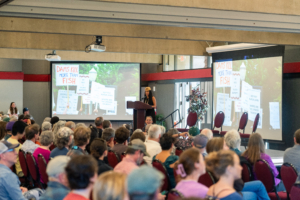
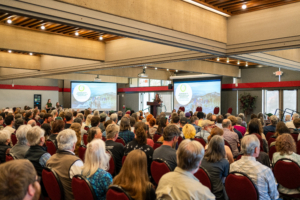 Last week’s event kicked off with a break-out session to give students an opportunity to speak directly with Cordalis. About 450 students, staff, faculty and community members then gathered in the Rogue River Room for a student-led program that brought forward diverse and personal connections to the river. Students from the Community Resilience and Leadership cohort; Environmental Science, Policy and Sustainability program; and the Native American Student Union shared stories that reflected their lived experiences and academic interests.
Cordalis, the evening’s keynote speaker, grounded the event with a broader story of resilience and restoration. Her work has been central to the historic Klamath Dam Removal, the largest dam removal project in U.S. history and the most significant salmon restoration effort in the world. She spoke as an attorney and advocate, and as a fisherwoman and member of a family deeply tied to the river. In a moving moment, members of her family joined her on stage, including her niece, Keeya Wiki, an Ashland High School senior.
“It was incredible to see the steadfast hope that Amy brings to her work,” SOU senior Maisie Bandel Ramirez said. “Hearing from the younger generations in her family, and their stories about going from dreaming of an undammed Klamath to getting to experience a free river, really encapsulated just how monumental their work has been.”
 First-year student Jes Muhlenkamp Joranco echoed that sentiment.
“It was truly inspiring to hear not only about Amy’s story but also her family stories,” Joranco said.
Cordalis returned to the central theme of hope grounded in action throughout the evening.
“When we equally value the rights of Indigenous peoples, nature and business, world renewal is possible,” she said. “Balance returns, life returns and so does hope.”
Three days after the removal of Iron Gate – the last dam standing on the Klamath – the lead salmon, or “ney-puy,” passed the former dam site and began a journey to spawning grounds not visited in 100 years.
“The salmon remembered,” Cordalis said.
That return has been both symbolic and measurable. Within the first year, 7,000 Chinook salmon swam past the former Iron Gate Dam site. In 2025, more than 13,000 salmon swam past the site and traveled into 400-plus miles of spawning habitat.

