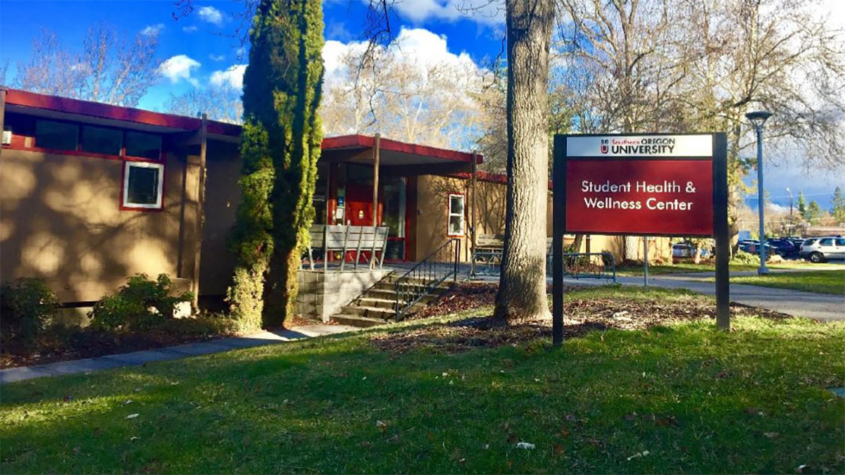

Professional counselors are available to students through the My SSP platform

Partnership offers SOU students real-time access to counselors

(Ashland, Ore.) — Southern Oregon University has begun winter term with a new partnership to provide real-time, 24-hour-per-day access to professional counselors who can support students through anything from mental health crises to everyday concerns.

The university has joined a growing list of educational institutions to work with the human resources firm LifeWorks to offer counseling and other resources through the company’s My Student Support Program (My SSP). Counselors are available for on-demand, no-appointment sessions by phone or chat – either online or on the My SSP mobile app – or by appointment for ongoing, short-term counseling. My SSP will complement SOU’s existing, on-campus services for student health and wellness, and is offered at no charge for SOU students.

“We recognize that the higher education setting, even at a welcoming and supportive campus such as ours, has stress points that can be difficult to work through alone,” said Anna D’Amato, executive director of the SOU Student Health & Wellness Center. “This partnership with LifeWorks to provide the full slate of My SSP services is a tremendous value to our students and the university. Students’ overall health and wellbeing – physical, mental and emotional – is our top priority, and this new tool will help us provide important services that cannot be fully offered through our own, limited staff.”

Students can access the new services through the free My SSP app, the website (https://myssp.app/ca/home) or by phone at 1 (866) 743-7732 (or at 001 (416) 380-6578 for those outside the U.S. or Canada).

The LifeWorks counselors are specifically trained to deal with challenges often faced by students, such as adapting to new challenges, academic success, stress and worry of daily life, relationship concerns, and sadness, loneliness and uncertainty. Multilingual counselors are available for sessions in English, Spanish, French, Mandarin and Cantonese – and in other languages, if available, by appointment.

The My SSP partnership also gives SOU students access – through the app, website and telephone – to a variety of articles, videos, tools and other resources.

My SSP offers guidance for faculty or staff members, or student leaders, on how to best manage difficult student situations and on facilitating “assisted referrals” for students of concern. Those who have frontline connections with students are encouraged to let them know it’s OK to ask for help, to recommend registering on the free My SSP app, and to call in themselves for advice on engaging students of concern.

LifeWorks, a leading provider of technology-enabled HR services, was launched in 1966 as W.F. Morneau & Associates, and now serves about 24,000 client organizations in 162 countries. Its international and domestic student support programs serve more than 2 million students at a variety of colleges and universities, with a worldwide network of more than 35,000 counselors – including at least 18,000 in the U.S.

-SOU-

SOU solar transition receives support from Congress

SOU receives solar support from Congress

(Ashland, Ore.) — Southern Oregon University will receive $2 million to support its transition to solar power and energy independence, a result of the federal appropriations bill hammered out through months of negotiations and approved by Congress last week.

U.S. Sens. Ron Wyden and Jeff Merkley of Oregon included the solar project in the spending bill at the request of SOU President Rick Bailey. The allocation will be used to partially fund the university’s multi-year solar transition.

“The entire Southern Oregon University community is grateful for the support of the federal government as we begin our effort to become the nation’s first public university to produce all of its own daytime electricity on its campus,” President Bailey said. “We especially appreciate the support and work of Senators Wyden and Merkley for prioritizing our sustainable energy conversion in this year’s federal spending bill.

“This allocation will allow us to take a substantial step toward our goal, and it reinforces our institution’s commitment to environmental stewardship, financial prudence and responsible leadership,” he said. “We look forward to beginning our next round of solar installations to further reduce both our dependence on the electrical grid and the day-to-day costs of powering a 21st century campus.”

The federal funding comes just two months after SOU received a $1 million grant from the Oregon Department of Energy to pay for most of a $1.34 million project to add solar arrays to The Hawk Dining Commons and the Lithia Motors Pavilion/Student Recreation Center complex. That project also includes the installation of battery storage at The Hawk to support students, first responders and the broader community, if needed.

The new federal allocation will help pay for additional solar arrays on SOU’s parking lots and rooftops. Producing all of its own electricity will save SOU at least $700,000 per year in utility costs, and President Bailey plans to expand the program from there – additional solar installations will eventually enable the university to generate income by selling electricity to local utilities. He achieved a similar but smaller solar project at Northern New Mexico College, where he served as president before joining SOU.

SOU will continue to implement energy conservation and energy efficiency measures as it increases its solar capacity.

The university currently has nine solar arrays on its Ashland campus, plus an array at the Higher Education Center in Medford and a pole-mounted array installed last year by a nonprofit on land leased from SOU. The two new arrays supported by the state grant will increase SOU’s solar capacity, and the federal funding will push the project forward even further.

SOU’s first solar array – a 6 kilowatt project with 24 solar panels – was installed on the rooftop of Hannon Library in 2000. A total of five new arrays have been added in just the past three years, in projects funded through a combination of private investors, grants, the student body and the university. SOU’s Hawk Dining Commons and McLoughlin Residence Hall each have solar hot water systems installed to augment their natural gas domestic water heating, and the campus also has three net-zero buildings – they create as much or more energy than they use.

The transition to solar energy is one of four entrepreneurial opportunities SOU is pursuing to create more of its own revenue. The university has also begun a project to demolish the long-vacant Cascade housing complex and replace it with a senior living facility that produces partnerships between its residents and the university. Funding for the demolition has been approved by the state and is expected to begin in the next few months.

Other projects that will produce revenue or reduce expenses for SOU include the establishment of a University Business District in southeast Ashland – discussions are underway with the local business community – and replacement of its operational software with the cutting-edge Workday platform, which eventually will save the university about $750,000 per year in recurring costs.

The projects are part of an effort to realign SOU’s financial structure, reducing expenses to better reflect current enrollment and academic interests, fight the national trend of skyrocketing tuition, expand revenue sources and position the university for strategic growth.

-SOU-

New grant for prior learning credits

SOU receives state grant to provide “prior learning” credits

(Ashland, Ore.) — Southern Oregon University has received a one-time, $338,000 grant from the Oregon Higher Education Coordinating Commission to expand opportunities for students to receive academic credit for knowledge and skills gained through life experiences such as work or military service.

SOU’s current Credit for Prior Learning program was initiated in 2015 as an option in the university’s bachelor’s degree program in Innovation and Leadership, which has been popular among mid-career adult students. The HECC grant, which was awarded this fall, has expanded the prior learning program campus-wide, and it already has been adopted in other academic areas, including Business, Communication, Media & Cinema.

“Offering students the option of Credit for Prior Learning is a way to honor the skills and knowledge our students bring to the school even before they have started taking classes on our campus,” said Moneeka Settles, coordinator for the Innovation and Leadership program. “It benefits students, no matter their major, because it recognizes the wisdom they have gained on their own life path.”

Students’ proposals for Prior Learning credits must meet several criteria under SOU’s policy for the program. Students must produce a portfolio that supports evidence they have learned the course outcomes, then faculty members assess the portfolio on a pass, no-pass basis. Students can also earn Credit for Prior Learning through challenge exams and military credit. Credits for prior learning can make up no more than 25 percent of the credits required for graduation.

SOU is among five Oregon universities and 14 community colleges that received this year’s HECC grants for Credit for Prior Learning programs. The HECC awarded a total of $10 million for the programs, under the state’s Future Ready Oregon investment package to support education and training that may lead to employment and family-wage careers. The grants are for one year, but institutions can apply to renew them annually.

Future Ready Oregon, funded by the 2022 Legislature, prioritizes historically underserved and vulnerable communities by offering opportunities to receive college credit “for prior experience or skills gained outside of traditional higher education institutions.”

The HECC requires standards for prior learning programs, monitors their implementation and provides periodic reports on them to the legislature. The HECC, which adopted its own prior learning standards in 2014, tracks the types and number of Credits for Prior Learning that are awarded throughout the state each year.

-SOU-

SOU pathway programs receive state grant

SOU “pathway” programs for Latino/a/x youth get boost from state grant

(Ashland, Ore.) — Southern Oregon University’s pathway programs that introduce local Latino/a/x students to the promise of higher education have received funding that will allow them to rebuild toward pre-pandemic numbers and achievement rates.

The highly successful Pirates to Raiders program in the Phoenix-Talent School District and the Bulldogs and Hornets to Raiders programs in the Medford School District will be boosted by a $250,000 grant for the current academic year. The grant is from the Oregon Department of Education’s Latino/a/x & Indigenous Student Success program, funded by the 2019 Oregon Legislature. Pending legislative approval and measurable progress toward its goals, funding for the SOU programs will be renewable at up to $200,000 per year.

“These programs and others across the state will receive significant needed support, thanks to the Legislature’s recognition that systemic inequities that Latino/a/x and Indigenous students have historically experienced must be addressed,” said Rachel Jones, SOU’s director of outreach and engagement. “Our communities will benefit from the success of their students, and their future involvement throughout the region.”

The SOU grant focuses primarily on the Pirates, Bulldogs and Hornets to Raiders programs – located at Talent Middle School and Phoenix High School, and at Medford’s McLoughlin and Hedrick middle schools and North and South Medford high schools – but will also support other ongoing SOU programs and events, including Academia Latina, Latino Family Day and the Cesar Chavez Leadership Conference.

The Pirates to Raiders program began in 2011, Bulldogs to Raiders in 2015 and Hornets to Raiders in 2017. All are intended to open doors to Hispanic students by forming partnerships between students, their families, their school districts and SOU to ensure that the students remain on track for high school graduation and college. Family members make sure their students attend school, manage their studies and participate in events related to the program. The university and school district offer mentoring, financial aid information, transportation to program events and opportunities to learn about SOU. The students take appropriate college preparatory courses, attend two program-related events each year and sign contracts, promising to stay on track to graduate on time.

The programs had grown to a total of about 375 students prior to the COVID-19 pandemic, achieving a high school graduation rate that was 43 percent higher than Oregon’s Latino/a/x student benchmark, double the statewide rate of higher education enrollment for Latino/a/x students and 3.8 times the rate of four-year college enrollment. The programs suffered through the pandemic, hurt by online-only instruction and staffing challenges in their host school districts.

The grant will enable SOU to hire Latino/a/x community members to serve as project coordinators supporting Latino/a/x students at the host schools. The programs have previously relied on staffing from site coordinators hired by the host schools, but those positions have been overtaxed with other duties and have seen high turnover. The new project coordinators from SOU will work with the schools’ site coordinators to provide more consistent services to students, increased engagement with parents and additional attention to culturally responsive curricula and teaching.

Students in the pathway programs will have increased access to mentoring, tutoring and workshops, and the programs will be better able to offer incentives – such as field trips and awards – for students who are on track academically or achieve key academic milestones.

Parents will receive regular updates on their students’ progress, have another trusted contact at their children’s school and receive support completing applications for extracurricular programs, financial aid and college admission. A new Parent Leadership Team made up of the parents of Latino/a/x students in four local school districts – Phoenix-Talent, Medford, Central Point and Eagle Point – will be formed to better incorporate community input into the pathway programs.

SOU will also partner with the Southern Oregon Education Service District’s Migrant Education Program to establish Latino Student Unions at schools that host the pathway programs; the SOU English Department will design a Cultural Empowerment Institute to help secondary school teachers focus on anti-racist and culturally responsive teaching; and the university will provide various offsets for opportunities such as dual-credit courses, college credit for foreign language skills, college application fees for those with demonstrated financial need and college move-in expenses for a limited number of students.

-SOU-

Green Film School Alliance membership for SOU Digital Cinema

SOU Digital Cinema accepted as Green Film School Alliance member

(Ashland, Ore.) — Southern Oregon University’s Communication, Media & Cinema program is one of 16 higher education programs accepted for new membership in the Green Film School Alliance – a collaboration of leading film schools that have committed to industry-level sustainable production practices in their programs.

The GFSA announced its new member institutions on Wednesday, more than doubling its membership to 27 sustainability-minded schools. The organization’s membership now includes colleges and universities in seven states, four countries and three continents – with 10 of them also appearing on the Hollywood Reporter’s Top 25 Film School list for 2022.

“It’s an honor for our young program to be recognized among the most prestigious film schools in the U.S., and beyond,” said Andrew Gay, an associate professor of digital cinema at SOU and chair of the university’s Communication, Media & Cinema program. “This alliance is an outstanding example of  SOU’s commitment to sustainability, our Digital Cinema program’s focus on state-of-the-art production, and SOU’s top-tier opportunities for students.”

SOU’s Digital Cinema bachelor’s degree program launched in 2019 and drew acclaim earlier this year for its innovative, 12-credit spring immersion course called “The Crew Experience.” Student filmmakers in the course spend an entire term learning from faculty and experienced mentors on location for a significant film project.

This year’s Crew Experience cohort produced the short film “Eight & Sand” – which last week became the 25th student project anywhere in the world to be awarded the Environmental Media Association Green Seal. SOU is the sixth university to earn an EMA Green Seal, and the first undergraduate program on the West Coast to do so. The seal is presented to student productions that achieve sustainable production goals identified in the GFSA’s Production Environmental Actions Checklist (PEACHy) for young filmmakers.

Vincent Smith, Ph.D., the director of SOU’s Division of Business, Communication and Environmental Science, said the university’s Digital Cinema Program is a perfect example of hands-on, interdisciplinary learning experiences that have become a hallmark of the institution.

“I am regularly asked to explain why Business, Communication and Environmental Science are in one division,” Smith said. “This is just one of many good reasons why thinking across traditional disciplinary boundaries makes good sense for our future.”

The Green Film School Alliance and its member colleges and universities commit to common sustainability language, standards and tools to reduce waste and lower the carbon footprint of film productions. The organization is supported by the Sustainable Production Alliance and the Producers Guild of America Green.

-SOU-

Solar power production to be supported by state grant

SOU to expand solar power, move toward energy independence

(Ashland, Ore.) — Southern Oregon University has been awarded a $1 million grant from the Oregon Department of Energy to expand solar power production on campus, in the next step toward its ambitious goal of becoming the first college or university in the U.S. to generate 100 percent of the electricity used on campus.

The award from ODE’s Community Renewable Energy Grant Program will add solar arrays to The Hawk Dining Commons and the Lithia Motors Pavilion/Student Recreation Center complex, and will pay for the installation of battery storage at the Hawk to support students, first responders and the broader community, if needed.

“This is a tremendous opportunity for SOU, and for our students and the Ashland community,” SOU President Rick Bailey said. “This grant supports our campus-wide efforts to expand sustainability as an integral part of our everyday operations. It also is a significant milestone in our entrepreneurial mission to reduce costs and broaden revenue, easing the financial burden on students and their families.”

Solar energy production is a key element of SOU’s innovative plan to develop new revenue streams and reduce dependence on the two traditional funding sources for public higher education nationwide – tuition and state funding. The proportions of funding from those two sources has flipped over the past 25 years in Oregon, from two-thirds state money and one-third tuition, to exactly the opposite.

Energy self-sufficiency will save SOU at least $700,000 per year in utility costs and President Bailey plans to expand the program from there, with additional solar installations that will enable the university to generate income by selling electricity to local utilities. He achieved that on a smaller scale at Northern New Mexico College, where he served as president before being hired at SOU in January.

SOU is also awaiting confirmation of a $2 million federal grant for its campus-wide solar build-out. Oregon’s U.S. senators, Jeff Merkley and Ron Wyden, have placed SOU’s request in the senate’s draft appropriations bill for the 2023 fiscal year, which is currently in a process known as “Congressionally Directed Spending.” The federal grant, if awarded, will pay for additional solar arrays on SOU’s parking lots and rooftops.

For the state grant that was awarded this week, SOU submitted its application in July for $1 million toward a project that will cost a total of $1.34 million. It is considered both a community renewable energy project and a community energy resilience project, under the definitions of ODE’s Community Renewable Energy Grant Program.

The program was created by the 2021 Legislature, which set aside $50 million for projects throughout the state over the next three years – with $12 million available in the 2022 funding cycle. The program – open to Oregon tribes, public bodies and consumer-owned utilities – drew a total of 56 applicants who submitted 68 applications, with 20 projects awarded grants in the program’s first round.

“These new solar projects at SOU will take our efforts to the next level,” SOU Sustainability Director Becs Walker said. “We are pursuing all viable opportunities to generate renewable energy on campus. This will help us financially as well as set us on the pathway to achieve carbon neutrality.  Our university is helping to lead the way for our community, region and the state of Oregon.”

SOU chose the Hawk Dining Commons and Lithia Motors Pavilion/Student Recreation Center projects for this year’s state funding based on site readiness, community resiliency and public welfare factors. SOU will continue to implement energy conservation and energy efficiency measures as it increases its solar.

The university currently has nine solar arrays on its Ashland campus with a total output of 455 kilowatts, plus an array at the Higher Education Center in Medford and a pole-mounted array installed last year by a nonprofit on land leased from SOU. The two new arrays supported by the state grant will increase SOU’s solar capacity by a total of 359 kilowatts.

SOU’s first solar array – a 6 kilowatt project with 24 solar panels – was installed on the Hannon Library in 2000. A total of five new arrays have been added in just the past three years, in projects funded through a combination of private investors, grants, the student body and the university. SOU’s Hawk Dining Hall & McLoughlin Residence Hall each have solar hot water systems installed to augment the natural gas domestic water heating, and the campus also has three net-zero buildings – they create as much or more energy than they use.

Solar energy production is one of four opportunities that SOU is currently pursuing in its effort to be more entrepreneurial in its approach to revenue generation. The university has also initiated a project to raze its vacant Cascade housing complex, which was completed in the early 1960s, and replace it with an innovative senior living facility that produces synergy between its residents and the university. Funding for the demolition has been approved by the state and is expected to begin in the next few months.

Other projects that will produce revenue or reduce expenses for SOU include the establishment of a University Business District in southeast Ashland – discussions are underway with the local business community – and replacement of its operational software with the cutting-edge Workday platform, which eventually will save the university about $750,000 per year in recurring costs.

The projects are part of an effort to “re-engineer” SOU’s financial structure, reducing expenses to better reflect current enrollment and academic interests, expanding revenue sources and positioning the university for strategic growth into the future.

-SOU-

SOU Native American Studies receives grant from Banyan Botanicals

(Ashland, Ore.) — Dragonfly’s Garden, located in Southern Oregon University’s community garden and a project of the Native American Studies Program, has been awarded a grant for $3,000 from Banyan Botanicals – a product and lifestyle company that focuses on the Ayurvedic alternative medicine system that is common in India and Nepal. Banyan Botanicals’ mission is to help people achieve health and well-being.

Banyan Botanicals grant will support hiring T Tschantre The NAS program will use the grant from Banyan to hire SOU alumna T Tschantre, who is of Tewa descent, to support participation in growth of Dragonfly’s Garden and to tend the plot with student intern Alanis Baldy, a citizen of the Hoopa Valley Tribe.

“Students in the Native American Studies Program at Southern Oregon University are deeply committed to sustainable food systems, cultivation of Indigenous first foods and food sovereignty,” said Brook Colley, Ph.D., chair of the NAS program.

“Many have limited opportunities to grow their food and to practice the cultivation of culturally important medicinal plants,” she said, “However, this garden gives students a safe place to learn these skills and be supported in their exploration and learning.”

NAS students attempted to start a student garden project for many years, but were plagued by challenges including a lack of resources to pay student workers, the COVID-19 pandemic and catastrophic Rogue Valley wildfires.

SOU junior Amanda Rose enrolled in Colley’s spring 2021 Native American Ecological Knowledge course, in which she learned about “three sisters” gardening – a system of companion planting in which three plants are grown symbiotically. She and seven other students initiated a group project using the dynamic polyculture system at The Farm at SOU, and ultimately harvested more than 200 ears of sweet corn and 200 squash, of four varieties. The produce was shared with the NAS program, Native students and local Native community members.

Banyan Botanicals grant will support student worker Alanis BaldyBaldy and other NAS students were inspired by the success of Rose’s three sisters garden, and mobilized to use the technique on a garden plot – which would become known as Dragonfly’s Garden – in the SOU Community Garden. The community garden is a student-run organic cooperative at the corner of South Mountain Avenue and Henry Street.

“Dragonfly’s Garden helps keep me connected to my culture and allows me to accomplish my goal of giving back to Indigenous communities,” said Baldy, who grew up on her tribe’s reservation in northern California  – a culturally enriched environment that taught her of responsibilities to the land.

Tschantre considers the grant-supported role at the garden to be a means of using knowledge to be of service to the community. Tschantre, reconnecting with Native roots, said that learning about Native first foods, plants and land restoration is an important part of a personal journey.

“I’m interested in learning how to use methods of companion planting to create healthy habitats using herbs, flowers and vegetables in other annual and perennial gardens,” Tschantre said.

Dragonfly’s Garden is now dedicated to growing student knowledge of Indigenous first foods and companion planting. Students have learned that the system improves pollination, controls pests, provides a habitat for beneficial insects and improves harvests.

“We are very thankful to Banyan Botanicals and our other partners who support these cultural and educational efforts.” said Colley, the NAS chair.

Additional support for Dragonfly’s Garden and the three sisters garden has come from Siskiyou Seeds, which donated seeds for both gardens, and the Traditional Ecological Inquiry Program, which provided camas bulbs, wild onion bulbs and bitterroot for the project. Donations to support Dragonfly’s Garden and other projects of the SOU Native American Studies program can be made online.

-SOU-

Indigenous Peoples Day returns to SOU

SOU commemoration of Indigenous Peoples Day returns as in-person event

(Ashland, Ore.) — The annual Indigenous Peoples Day celebration at Southern Oregon University is returning as an in-person event on Monday, Oct. 10. Indigenous Peoples Day amplifies Indigenous voices and celebrates the historic, cultural and contemporary presence of Indigenous peoples and Tribal Nations, who have persevered in the protection of Indigenous rights and cultural sovereignty, and continue to make significant contributions to the world.

SOU’s president announced in 2016 that the university would observe Indigenous Peoples’ Day after alumna Lupe Sims, a descendant of the White Mountain Apache Tribe, partnered with the university’s Diversity and Inclusion Oversight Committee to petition for recognition of Indigenous sovereignty. Formal observation by SOU was declared in June 2017, and  the Ashland City Council voted two months later to follow suit.

This year’s celebration – the fifth official observation of Indigenous Peoples’ day by SOU and the city of Ashland – will begin at 11 a.m. with a salmon bake in SOU’s Stevenson Union Courtyard (plates are $8, no charge for Elders). Sims, who is coordinating this year’s celebration, will deliver opening acknowledgements, followed by an honor song by host drum Screaming Eagle (the Jackson family of Klamath Falls), who were present at the first formal Indigenous Peoples Day event in 2017.

David West, a citizen of Potawatomi Nation and director emeritus of the Native American Studies department at SOU, will deliver the opening prayer, and SOU Provost Susan Walsh will read a Land Acknowledgment. SOU President Rick Bailey and SOU professor and former Ashland City Councilor Dennis Slattery will read declarations on behalf of SOU and the city of Ashland. Musician, traditional dancer and SOU Native Nations Liaison Brent Florendo (Wasco Band of the Confederated Tribes of Warm Springs) – will honor those recognitions with a hand drum song and will lead a community round dance.

The day’s events will continue with Indigenous advocacy at 12:30 p.m. in the Stevenson Union’s Rogue River Room, led by Tribal citizens including Elder and traditional ecologist and practitioner Joe Scott (Confederated Tribes of Siletz Indians and Takelma); Dan Wahpepah (Anishinabe, Kickapoo, and Sac and Fox); Rowena Jackson (Klamath Tribes); Chauncey Peltier, (Turtle Mountain Band of Chippewa and Fort Totten Sioux); and Antonio Bonilla (Afro-Taino). Tribal Elders West and Ed Little Crow (Lakota and Dakota) will hold an Elder discussion that is open to the community. Elder Mark Colson (Chehalis, Yurok and Dakota) will speak about Indigeneity and healing within Indian country in the present. Michele Pavilonis, of Lenape descent, will lead a Medicine Wheel Healing Support Group – a talking circle for finding and keeping balance – during the day’s events on SOU campus. The support group will be held in honor of breath and heartbeat.

SOU student-driven initiatives during this event include a formal recognition of the nine federally recognized Oregon Tribes and the continuing relationship between SOU and Indian country. That recognition will be in preparation for a permanent display and dedication of the flags of the nine Tribal Nations at a central location on campus in the upcoming year.

The Shasta Takelma Learning Garden working group, which is part of a larger Indigenous Gardens Network – a hub for Indigenous-led land projects centering on First Foods, land stewardship, educational opportunities and habitat restoration – will share about their place-making collaboration with the Siletz Tribes and Grand Ronde Tribes.

The student-led projects represent progress that has been made in the past five years toward SOU honoring the stewardship of Indigenous cultural sovereignty. Everyone is welcome and will have the opportunity to gather in community, and stand in solidarity, with Indian country and Native/Indigenous peoples. This is as drug- and alcohol-free event.

-SOU-

Two appointed to SOU Board of Trustees

Former SOU administrator and consultant appointed to Board of Trustees

(Ashland, Ore.) — Liz Shelby, who retired from Southern Oregon University after serving as director of government relations and chief of staff, and lobbyist and government relations consultant Iris Maria Chávez have both been appointed by Gov. Kate Brown and confirmed today by the Oregon Senate to serve on the university’s Board of Trustees. They will begin their service to the board on Sept. 28.

Shelby appointed to Board of TrusteesShelby will complete the partial four-year term to which retired Oregon Supreme Court Justice Virginia Linder was appointed in February, but was unable to serve. Chávez will complete the unexpired four-year term of Lyn Hennion, who served on the board since its inception in 2015 and was appointed to a new term in June.

“I am honored and excited to join the Board of Trustees of Southern Oregon University,” said Shelby, who served for 25 years at SOU before her retirement in 2017. “With my background and commitment to public higher education in Oregon, I am eager to help guide the sustainability and diversity of SOU during this important time in the university’s history.”

Chavez appointed to Board of TrusteesChávez is the managing partner of Equity Action Partners of Portland, and has more than 15 years of experience working in government affairs, community engagement and communications for advocacy organizations and think tanks, advancing state and federal policy to improve community outcomes and increase government accountability. She has built issue-advocacy campaigns with a variety of advocacy and civil rights organizations across the country, leading to bipartisan legislation to provide investments in education, public safety, social justice and child welfare.

“I’m excited to join my new colleagues on the board at Southern Oregon University,” Chávez said. “I look forward to supporting the strategies and vision that will ensure the continued success of the university and our students.”

Chávez serves as the board chair for the Partnership for Safety & Justice and is a board member for the Latino Network Action Fund. She has built coalitions with – and advocated on behalf of – organizations including the Education Trust, League of United Latin American Citizens, Chalkboard Project, Children’s Institute, Partnership for Safety & Justice, Sponsors, Inc., and the Oregon Coalition of Community Charter Schools.

She earned her bachelor’s degree in history, sociology and African Diaspora Studies from Tulane University and her master’s degree in social policy from the University of Chicago.

Shelby served six SOU presidents as director of government relations and three as chief of staff before her retirement five years ago. She was involved in several significant transitions for the university, including its name change from Southern Oregon State College in 1997 and the shift to an independent board of trustees in 2015.

She previously served 16 years as director of the federal Small Business Development Center in the SOU School of Business, helping local entrepreneurs with business plans and working with existing business owners to develop strategies that increase profitability.

Shelby, a two-time alumna,  earned her bachelor’s degree in business and her master’s degree in business administration at SOU. She is the board chair for the Resolve Center for Dispute Resolution and Restorative Justice and is vice president of the Jefferson Public Radio Foundation’s board of directors. She previously served on the board of Rogue Credit Union for 14 years.

“The SOU Board of Trustees is very happy to welcome Iris and Liz to the board,” said Daniel Santos, the board chair. “Their expertise and broad range of experiences will help all of us to guide the university and advance its mission for the next 150 years. We are also tremendously grateful for Lyn Hennion’s lengthy and insightful service and leadership on the SOU Board; we wish her the very best.”

-SOU-

President Bailey lays out financial strategy to solidify SOU's operations

SOU prepares for strategic realignment to solidify financial future

(Ashland, Ore.) — Southern Oregon University President Rick Bailey announced to employees today an emerging plan to address an outdated financial model that has left SOU and many other public higher education institutions relying too heavily on tuition revenue to balance their budgets. According to Bailey, the work over the next several months will be to strategically realign the university for future growth.

“We are drawing a line in the sand on using tuition increases to meet rising costs,” President Bailey said. “We are all committed to the innovations that will keep more and more from being put on the backs of our students.”

The president called for teamwork in managing costs with steps that will reduce recurring, annual expenses, as well as programmatic realignments that enable SOU to sharpen its focus and better prepare students for success and service to their communities.

“Our university has operated for most of its 150 years on a financial model that’s very common in public higher education: near-exclusive reliance on a combination of state funding and tuition revenue,” Bailey said. “That model was effective until about 30 years ago, when the balance between those two funding sources began to flip – what used to be about a two-thirds share from the state and one-third from tuition is now the exact opposite.

“Our leadership and budgeting teams have looked long and hard at our structural issues, and are confident that SOU’s financial foundation can be successfully re-engineered, but it will take several years to get there,” Bailey said. “Our new, bottom-line fiscal formula must be one in which revenue is greater than or equal to costs for the long-term. While that sounds fairly straightforward, it isn’t always followed.”

Bailey said there are four “planks” to re-engineer the university’s fiscal operations: managing costs, vigorously going after grants, leveraging SOU’s growing philanthropic capacity and diversifying the university’s revenue streams.

In his announcement, Bailey offered two examples of how the university has already begun to address recurring costs: a three-year shift to a new core information system that will improve service and save $700,000 per year; and the goal of making SOU the first public university in the nation to make all of its own electricity on its campus, saving another $700,000 to $800,000 per year. The university’s shift to the Workday information system began last month, and SOU has applied for both state and federal funding for the next steps toward powering the entire campus with its own solar arrays.

Bailey acknowledged that changes to SOU academic and support programs will be complicated but he promised transparency and intends to include student, faculty and staff governance groups in the analysis process, along with the unions that represent faculty members and classified employees.

“Our guiding principles throughout this process will be to act with integrity, transparency, compassion and humility; to focus on the best interests of our students and the long-term vision of SOU; and to view each step through the lens of JEDI – justice, equity, diversity and inclusion,” he said.

Bailey cited recent examples of how SOU efforts in the areas of grant procurement and philanthropy are already on the upswing. Recent grants from the National Science Foundation will pay for cutting edge research equipment in the university’s Chemistry and Physics Department, and will allow researchers in the Computer Science Department to work with local elementary teachers to develop their students’ computational thinking skills. And SOU just last week announced a $12-million philanthropic commitment from Lithia Motors and GreenCars that will support the university’s sustainability and accessibility efforts. That gift announcement came just months after the estate of late wrestling coach Bob Riehm made a $3 million donation, which at the time was easily the largest-ever single gift to the university.

The SOU president said that his vision for diversifying revenue to the university, beyond the traditional sources from tuition and state funding, will start with four ideas: expanding solar production as mentioned above; razing the Cascades Complex and building an innovative senior living facility that creates synergy between its residents and students; establishing a University Business District that produces partnerships between SOU and neighboring businesses; and creating a training center to help other organizations transition their core information systems to the Workday platform.

“There are undoubtedly more ideas that we have yet to imagine, but these are the handful that we are actively pursuing for now – and we are confident in each of them,” Bailey said “If just one or two of them pan out, they will be game-changers. If all of them cross the finish line, they will be transformational for the university. Ultimately, I am confident that SOU will reimagine what public higher education looks like, build a fiscally sustainable institution for our students, faculty and staff, and become a role model for the rest of the country – and we will do it together.”

-SOU-