

Two SOU alumni author second book for educators
(Ashland, Ore.) — Two alumni of the SOU School of Education’s administrative licensure program and longtime education leaders in southern Oregon have published their second book together – “A School Leader’s Playbook for Tough Conversations.”
Tiffany Burns – a full-time instructor in the School of Education who previously served 12 years as a principal in the Ashland School District – teamed with South Umpqua School District Superintendent Erika Bare on the new book, which was published this month by ConnectEDD Publishing and is available on Amazon.com.
The book offers tools and strategies for “the hardest adult conversations – especially those tense moments with staff, caregivers and colleagues that feel heavy, live rent-free in our heads and keep us up at night,” according to a summary on Amazon.
“You’ll learn how to address poor performance, de-escalate conflict, stay grounded when emotions rise, prepare for high-stakes conversations and coach adults in ways that strengthen both performance and culture,” the description says.
The book includes resources such as frameworks, scenarios, planning tools and “sentence stems” that can be adapted for use in difficult situations.
The new book follows the first by Burns and Bare, “Connecting Through Conversation: A Playbook for Talking with Students,” which was published by ConnectEDD in March 2023. That book offers approaches that can be used to create “connected relationships” with students, avoid power struggles and use communication as an effective tool.
Burns earned her bachelor’s degree in Theatre, master of arts in Teaching, and master’s of education in Administration and English for Speakers of Other Languages – all at SOU. She also received her administrative licensure certification at SOU. Burns has taught elementary, middle, high school and university students in public, private, bilingual and homeschool settings in Oregon, Alaska and Mexico.
Bare received bachelor’s and master’s degrees in Elementary Education & Teaching at the University of Oregon, and her administrative licensure credential at SOU. She has served as a special education teacher at every grade level in both the West Linn School District and the Medford School District. She has served in various administrative roles with the Ashland and Medford School Districts and is currently the South Umpqua superintendent.
-SOU-


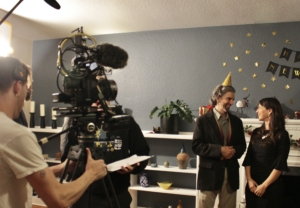 The production-intensive Crew Experience course is taught by Nora Zubizarreta, an assistant professor in
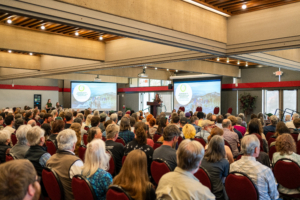 Last week’s event kicked off with a break-out session to give students an opportunity to speak directly with Cordalis. About 450 students, staff, faculty and community members then gathered in the Rogue River Room for a student-led program that brought forward diverse and personal connections to the river. Students from the
 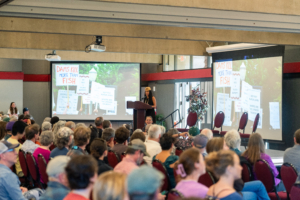 First-year student Jes Muhlenkamp Joranco echoed that sentiment.
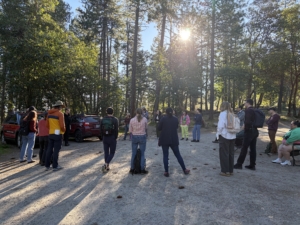 The workshop explored areas of synergy and shared interests around teaching and research, with a focus on community-engaged research. Community partners from the Rogue River Watershed Council, Jackson Soil and Water Conservation District, The Nature Conservancy, City of Ashland, Medford Water Commission and Southern Oregon Forest Restoration Collaborative also participated in the multiday event. Those partnerships provided some grounding for the research collaborations, and also an opportunity to take two field trips to learn about river restoration (with the Rogue River Watershed Council), and fire management in the Rogue Valley (with the City of Ashland fire department and The Nature Conservancy).