Philanthropy accounts for second-highest total ever in 2025

Fiscal year 2025 among best for SOU philanthropy

(Ashland, Ore.) — Southern Oregon University continued its historic fundraising run in fiscal year 2025, raising $14.17 million.

The philanthropic total for FY25 is the second-highest annual total ever raised for the university; in fiscal year 2023, the university raised more than $19 million, including $10 million from Lithia Motors and Green Cars.

“We’re generating momentum for the future of the university, and we are seeing that play out each year,” said Janet Fratella, SOU’s Vice President for University Advancement and Executive Director of the SOU Foundation.

Strong engagement with SOU alumni and solid campus partnerships were two of the keys to success for the fiscal year that ended June 30. The year’s gifts increased support for SOU’s academic core, including projects for faculty, student affairs and athletics. More than $4 million is earmarked specifically for scholarships.

Projects that will be funded by recent commitments include a new kitchen at The Farm at SOU, scholarships and new mentors for students in the University Coaching & Academic Mentoring (UCAM) program, a new fleet of mountain bikes for the Outdoor Adventure Leadership program, a new international exchange program with a university in the African country of Ghana, a new piano lab and vocal isolation sound booth, marimba music performances, support for students in STEM summer research programs, and new faculty fellowships in SOU’s Education, Music and STEM programs.

SOU received gifts from more than 4,000 donors during FY25 – the first time that milestone has been reached.

“Our long-term goal is to ensure that all our donors have an exceptional experience and that they continue their support,” Fratella said. “Our SOU donors are pivotal to the success of the university, as philanthropy creates a level of excellence that state dollars alone cannot provide.”

Fratella also said that many donors are supportive of the university’s current efforts to “right-size” and rebuild the institution to be financially stronger and more capable of withstanding periodic budget issues.

“Our donors are standing by us,” she said. “Our goal is to reshape SOU to be a more resilient university.”

Fratella also noted that the SOU Foundation Board of Trustees – the separate, university-affiliated foundation – have been in lock-step in helping SOU achieve its goals.

“I commend the foundation trustees, who are personally giving of their time, talent and treasure to ensure that the university is well positioned for the future,” she said.

-SOU-

SOU Ashland will rebuild itself, President Rick Bailey announced

SOU announces plan to rebuild itself in response to fiscal crises

(Ashland, Ore.) — Southern Oregon University President Rick Bailey announced today that the university will rebuild itself as an institution with a target of a $60 million annual budget – 15% lower than its current total – in response to devastating funding trends at both the state and federal levels. The university will rely, in part, on a rarely used contractual mechanism called financial exigency to respond to its fiscal crises and quickly transform itself into a smaller but much more resilient institution.

The decision to enable the exigency process was formalized through a joint declaration between President Bailey and the Associated Professors of Southern Oregon University (APSOU), the faculty union. Exigency can only be triggered by otherwise unsolvable financial challenges like those facing SOU, and enables the university to take the steps necessary to reduce expenses including personnel costs, regardless of protections that may otherwise be afforded under the terms of collective bargaining agreements. It allows for expeditious and decisive actions.

“Details of the provisional plan that we have put forward are extremely and deeply personal, as they will affect not only several SOU programs and services that we all respect, but cherished members of our campus family,” President Bailey said. “Even though the path we are taking will put the university on much better long-term fiscal footing, these changes will result in heartbreaking outcomes for people who we love and respect.”

The provisional plan – which will be finalized in late August, following potential input from SOU’s faculty union – was outlined for the university’s employees and students during a “Campus Conversation” this morning at the Music Recital Hall.

SOU has been confronted this year with funding inadequacy at the state level, unprecedented uncertainty in its federal partnerships and lagging enrollment and retention. The Oregon Legislature’s appropriation for the 2025-27 biennium does not keep pace with basic cost increases such as retirement and medical benefits that are outside of the university’s control. The federal government has signaled its intent to dismantle or reduce support systems for low-income students, such as Pell grants and the Title IV TRIO-Success at Southern Program. And SOU’s enrollment has declined steadily over the past decade, due to demographics, changing attitudes toward higher education, financial issues and other factors.

The SOU Board of Trustees directed university leaders last month to identify $5 million in budget reductions to be achieved before the end of the 2025-26 fiscal year. It was as President Bailey and his leadership team confronted that challenge when the need for even more monumental change became apparent.

“We recognize that the fiscal exigency process will be deeply challenging for many in the SOU community,” said Ben Cannon, Executive Director of Oregon’s Higher Education Coordinating Commission. “However, today’s unfortunate news – and the difficult financial reality driving it – is a critical step in positioning SOU for long-term stability.

“SOU’s plan aims to ensure students can continue to access high-quality courses and programs, while orienting SOU’s future towards a focused set of offerings that are aligned with regional and statewide needs,” Cannon said.

Despite instituting the SOU Forward initiative just two years ago – a plan to reduce reliance on state funding and tuition revenue by cutting costs (by eliminating 13% of the university’s work force), leveraging grants and philanthropy, and cultivating new revenue sources – the university found itself in a new crisis caused by external forces outside the scope of its immediate control.

Members of the SOU campus community submitted more than 70 pages of ideas and proposals as President Bailey and his cabinet members sought to decrease costs or rethink business processes. There have been budget-related updates to campus each week, consultations with academic deans and program chairs, and multiple meetings with shared governance partners – representatives from the unions for both faculty and classified staff, the organization that represents unclassified staff and the Associated Students of Southern Oregon University.

Ultimately, the president and his leadership team determined that SOU has an infrastructure of faculty and staff members that could support student enrollment as high as 7,500 – but the university’s full-time equivalent enrollment has been closer to 3,500 for several years.

The plan outlined today is based on the fundamental questions of what a $60 million university should look like, what the scope of its academic portfolio should be, and what SOU programs and services are mission-critical rather than mission-enhancing.

The model that is emerging will be built on responsiveness, focus, and resiliency, with academic programs strategically identified to match the academic preferences and professional needs of the region and state. Today’s Campus Conversation shed some light on where the reductions are likely to occur, but specific positions will only be finalized after a formal process between the university and the faculty union.

“This transformation will ensure that we focus our energy and resources toward programs that help the university to become an even more responsive economic prosperity engine for our region and for the benefit of all Oregonians,” President Bailey said.

Reducing expenses will remain just one part of SOU’s fiscal strategy, as the university will continue its efforts with philanthropy and grants, and to diversify revenue streams. The successes of the SOU Forward plan and earlier efforts include $22 million in grant support and $50 million in philanthropic gifts since 2021, $5.8 million in funding for solar projects and the ongoing identification and evaluation of private development partners for an older adult living complex on campus.

-SOU-

Town hall at SOU Ashland with Attorney General Dan Rayfield

SOU to facilitate AG’s town hall

(Ashland, Ore.) — Oregon Attorney Dan Rayfield will hold a town hall event from 6 to 7:30 p.m. on Thursday in the Rogue River Room of Southern Oregon University’s Stevenson Union. The event – part of the Rayfield’s ongoing series of “Safeguarding Oregon: Federal Oversight” meetings – will feature a panel with the attorney general, State Sen. Jeff Golden and State Rep. Pam Marsh, with moderator Jeremiah Rigsby of CareOregon.

The town hall will center on decisions and actions by the federal administration and their impacts on Oregon and Oregonians. It will include an opportunity for attendees to give public testimony and share their perspectives, and also to ask questions of the elected officials. American Sign Language interpretation will be provided.

Those who are interested in attending, signing up to give public comment or submitting questions in advance can RSVP here.

The statewide “Safeguarding Oregon: Federal Oversight” series began with an April town hall on the Portland State University campus, where Rayfield was joined by Arizona Attorney General Kris Mayes. Rayfield’s focus for the meetings is to hear testimony from across Oregon as he shapes legal strategies to protect the state’s interest.

On his “Federal Oversight” website, the attorney general invites southern Oregon residents to “Share your experience of how you’ve been impacted by federal actions – whether around healthcare, support for veterans, schools, libraries, or federal workers or something else.”

SOU is serving as the town hall’s host and facilitator, and encourages residents to attend and learn more about issues and potential issues. The university does not endorse viewpoints that may be expressed during the event.

Rayfield has appointed a 14-member “Federal Oversight and Accountability Cabinet” that includes four union officials, two law professors and representatives from various other Oregon organizations. The cabinet is intended as “an innovative partnership between the Oregon Department of Justice and key communities in Oregon’s work to defend against potential federal impacts on the state and its people,” according to the website.

-SOU-

OLLI at SOU members on trip to Talent Maker City

Where curious minds gather: OLLI at SOU Open House

No tests. No grades. Just the joy of learning and making connections.

That’s the spirit behind the Osher Lifelong Learning Institute at Southern Oregon University (OLLI at SOU), a thriving community where adults aged 50 or better explore new interests, form lasting friendships and continue discovering the world around them. OLLI at SOU – entering its 32nd year – invites the public to sample its engaging offerings at the 2025 OLLI at SOU Open House on Wednesday, August 6, from 1 to 4 p.m. at the SOU Stevenson Union.

OLLI at SOU pickleball classThe free event is a celebration of curiosity and connection. The open house is a one-stop gateway to all that OLLI offers, with approximately 150 fall course previews, demonstrations and exhibits from dozens of like-minded community organizations.

OLLI at SOU has grown into one of the Rogue Valley’s most dynamic adult learning programs. It offers more than 300 classes annually, in-person and online. OLLI covers a spectrum that ranges from AI to art history, and from geology to zentangle – all taught by volunteer instructors ranging from former teachers to passionate hobbyists.

With a low annual membership fee of $150, OLLI at SOU offers access to a full year of learning without per-course tuition (membership fee assistance is available), many programs and activities, travel opportunities, shared interest groups and social events.

“Come for the intellectual stimulation, stay for the people,” says one longtime member. “OLLI gave me purpose after retirement — and an entirely new circle of friends.”

Open House highlights include:

  • Preview fall OLLI courses and meet instructors
  • Explore SOU exhibits
  • Learn about community partner organizations
  • Enjoy free refreshments provided by local retirement communities
  • Enter drawings for valuable door prizes
  • Special prize drawing for those that register in advance for the Open House

For more information or to register for the Open House, visit sou.edu/olli/open-house or call (541) 552-6048. Stay curious, stay connected and have fun doing it!

Story by Laura Simonds, OLLI Volunteer

Older adult housing and education facility finalists come to campus

SOU considers partners for older adult housing and education facility

(Ashland, Ore.) — Southern Oregon University is in the process of selecting an official partner to build and operate a housing and educational facility for older adults on a 4.3-acre site previously occupied by the Cascade Complex of residence halls.

“SOU is excited to continue advancing this initiative to identify a partner company that aligns with our vision and values for this new space on campus,” SOU President Rick Bailey said. “This also serves as a testament to our commitment to changing the fiscal model of our university to keep it affordable and accessible for generations of students to come.”

SOU has invited two companies to campus, where they will present their visions for a partnership during the second phase of the selection process. The companies under consideration are McCormack Baron Salazar and Pacific Retirement Services.

Representatives of both companies will engage with university leaders, the wider campus and local community during their visits to Ashland. The companies were selected in phase one as part of a national “request for proposal” bid process.

Medford-based Pacific Retirement Services, whose properties include the Rogue Valley Manor, will make its on-campus presentation from 9 to 9:50 a.m. on July 9 in the SOU Music Recital Hall, followed by St. Louis-based McCormack Baron Salazar, which will make its presentation from 1:30 to 2:20 p.m. on July 11, in the Music Recital Hall .

Members of the SOU, Ashland and Rogue Valley communities are encouraged to attend each of the moderated sessions. The meetings will feature presentations from the vendors, followed by opportunities for questions and answers.

Community members may submit questions in advance to ensure a robust discussion. SOU has established a designated website (https://sou.edu/older-adult-living-community-provider-partnership/) for those seeking additional information or to submit questions. The university’s Office of the General Counsel can also be contacted at generalcounsel@sou.edu or (541) 552-8055 for further inquiries.

Developers from around the country were invited in January to submit proposals for the project – an entrepreneurial opportunity to forge a synergy between the facility’s residents, traditional SOU students, the Osher Lifelong Learning Institute (OLLI) at SOU and the university. The project is intended to generate long-term revenue for SOU while supporting the university’s commitment to lifelong learning.

Several proposals were submitted and were narrowed to the two finalists in a review process that extended through the spring.

The university will make its final selection, then negotiate specifics for a public-private partnership to build and run the proposed SOU facility. If those negotiations fail to produce an agreement, the university will shift to the runner-up.

The university is not expected to take an ownership interest or operational role in the project, but will provide agreed-upon services and amenities for the facility and its residents.

Older adult communities are a rare but growing feature on university campuses across the U.S., and the SOU facility would be the first in Oregon – capitalizing on southern Oregon’s reputation as a retirement mecca with a blend of educational, cultural and recreational opportunities.

-SOU-

About Southern Oregon University
 Southern Oregon University is a medium-sized campus that provides comprehensive educational opportunities with a strong focus on student success and intellectual creativity. Located in vibrant Ashland, Oregon, SOU remains committed to diversity and inclusion for all students on its environmentally sustainable campus. Connected learning programs taught by a host of exceptional faculty provide quality, innovative experiences for students. Visit sou.edu.

Sustainability Director Becs Walker among solar panels at SOU

SOU maintains “Gold” in prestigious sustainability rating

(Ashland, Ore.) — Southern Oregon University’s rating for campus-wide sustainability achievements remains at the “Gold” level and is the highest of five participating colleges and universities in Oregon, as measured by an evaluation system developed by the Association for the Advancement of Sustainability in Higher Education (AASHE).

SOU improved its score from three years ago in the AASHE’s Sustainability Tracking, Assessment & Rating System (STARS) that is used to grade colleges and universities worldwide. The system grades participating institutions in 45 subcategories, and SOU scored particularly well for its sustainability-based course offerings, graduate programs, outreach and communication efforts, student success, civic engagement, and institutional climate and governance.

“STARS was developed by the campus sustainability community to provide high standards for recognizing campus sustainability efforts,” said AASHE Executive Director Meghan Fay Zahniser. “Southern Oregon University has demonstrated a substantial commitment to sustainability by achieving a STARS Gold Rating and is to be congratulated for their efforts.”

SOU first achieved the system’s silver level in 2017, and that rating was reaffirmed in 2019, before the university reached AASHE’s Gold level in 2022. The latest Gold rating will be in effect for three years.

Participants in AASHE’s can be recognized simply for reporting their sustainability achievements, or for rating at the organization’s bronze, silver, gold and platinum levels. STARS is used by more than 1,200 participating institutions in 52 countries, rating their sustainability efforts in five categories: academics, engagement, operations, planning and administration, and innovation and leadership.

“SOU’s Gold STARS rating is a powerful testament to the leadership, dedication, and innovation demonstrated across our entire campus community,” said Becs Walker, SOU’s Director of Sustainability. “It’s exciting to see us not only maintain this high standard but also make meaningful improvements in key areas.

“Sustainability is deeply woven into both our daily operations and long-term strategic vision. We’re proud to continue challenging ourselves to find better, smarter and more impactful ways of doing things at SOU.”

SOU’s latest Gold rating takes into account the university’s ongoing efforts to achieve a variety of sustainability goals. STARS assesses environmental factors, along with social and economic considerations. SOU has demonstrated progress in many areas related to sustainability in achieving the gold rating, including governance of sustainability, health and wellbeing, protecting the environment, equity, social justice and community engagement.

The new STARS rating from AASHE is the latest of many sustainability efforts by the university in recent years. SOU was the nation’s first certified Bee Campus USA and has maintained that certification, has been named a Tree Campus USA for eight consecutive years.

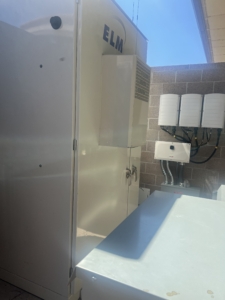
The university has been awarded $5.8 million in state and federal funding over the past three years to support energy generation and resilience, including six new rooftop solar arrays, one parking lot canopy array and two battery storage systems. SOU currently has solar arrays on nine Ashland rooftops and one on its Medford campus, for total generating capacity of 842kW – 11.6% of the electricity it uses.

SOU purchases the rest of its electricity through the city of Ashland – a mix that includes as much as 77% renewable energy.

The university has also launched its Institute for Applied Sustainability since the 2022 AASHE rating. The institute – part of an historic philanthropic gift from Lithia Motors and its GreenCars division – identifies and implements initiatives that move the university toward sustainability, collaborating with Lithia to develop projects and programs such as a national sustainability conference and an academic credential in corporate sustainability.

AASHE is a nonprofit organization that helps colleges and universities work together to create and lead the way to a sustainable future. Its STARS program is the most widely recognized framework in the world for publicly reporting comprehensive information related to a college or university’s sustainability performance.

-SOU-

Surprise speaker Tina Kotek at SOU Ashland commencement

Commencement surprise: Gov. Kotek addresses SOU graduates

(Ashland, Ore.) — Oregon Gov. Tina Kotek surprised graduates and audience members by visiting Ashland to deliver the commencement address for Southern Oregon University’s class of 2025 on Saturday. The event – SOU’s 99th Commencement – marked the first time the governor has spoken at a graduation ceremony since taking office.

“I know that young Americans feel conflicted about their world, about themselves, about the future,” Governor Kotek told the SOU graduates. “But don’t give up on the big picture. Don’t give up on what the world can be.

“So, as you start a new chapter in your life, believe in yourself. Believe in others. And believe in something bigger than yourself. You’ll like where it takes you.”

SOU President Rick Bailey expressed his thanks to the governor and to the day’s honorees – the graduates.

“Today our governor gave us all a beautiful and gracious gift by taking the time to help us celebrate our graduates,” Bailey said. “All of us were honored to host Governor Kotek, who exemplifies the transformative power of higher education and serves as a powerful role model for our university and our graduates.

“She is an inspiring leader, and her comments today truly moved and motivated those in SOU’s Class of 2025 as they transition into meaningful careers as future leaders of our region and our state.”

The 880 graduates in SOU’s class of 2025 – and the capacity crowd at SOU’s Raider Stadium – cheered and applauded throughout speeches from Gov. Kotek, President Bailey, student Parker Boom and others in the 2 ½-hour ceremony. Blue skies and moderate temperatures helped to create a picture-perfect backdrop as a total of 1,056 degrees were conferred – 659 undergrad degrees, 221 graduate degrees and 176 certificates.

Boom, a creative writing graduate and poet, drew sustained applause as her speech came near its conclusion.

“As we celebrate today, I urge all of us to embrace our active role in the meaning-making of the world,” she said. “To be conscious of its direction. To witness and notice the shape of the earth, the quality of light. To hurl ourselves against billionaires, monarchs, oligarchs and regimes. To place ourselves between the sword and the neck. To insist on all our lives.

“That work, too, is worthy of celebration.”

Governor Kotek and President Bailey presented diploma covers, shook hands and posed for photos with each new graduate as their names were called and they walked individually across the stage. SOU Provost and Executive Vice President Casey Shillam, Ph.D., presided over the event.

Gov. Kotek graduated high school near York, Pennsylvania and attended Georgetown University before earning a bachelor’s degree in religious studies from the University of Oregon. She received her master’s degree in international studies and comparative religion at the University of Washington before returning to Oregon, where she served as a public policy advocate for the Oregon Food Bank before beginning her political career in 2006.

She was elected to eight two-year terms in the Oregon House of Representatives – and served 10 years as House Speaker – before her election as governor in 2022..

-SOU-

SOU Ashland Spring Wellness Event

Highlights from SOU’s Spring Wellness Event

The Spring Wellness Event that was held recently at SOU transformed the lawn in front of Britt Hall into a hub of creativity, movement and community connection, with more than 30 students, staff and faculty taking time to prioritize their well-being during the busy end of spring term.

SOU Ashland Wellness EventAttendees at the event – hosted by the Southern Oregon Behavioral Health Initiative – enjoyed a range of relaxing and restorative activities, including painting, essential oil blending and other hands-on crafts that invited creativity and mindfulness. The stretching section offered a calm space to breathe and gently move, while the sunny afternoon provided the perfect setting to reconnect with others in a low-pressure, welcoming environment.

The wellness lawn also welcomed some delightful surprise guests – including a juggler and several playful therapy dogs that brought joy and laughter to all ages. A slack line was set up for those looking to test their balance (or just have a good laugh), and many attendees stayed well beyond the planned time to soak up the good vibes.

Organizers thank everyone who participated in the event, which was more than just a break from finals stress; it was a reminder of the importance of community, creativity and caring for ourselves and one another.

The successful wellness event follows a “Culture of Care” discussion a few months ago in the Hannon Library’s Meese Room, which was also well-attended – with about 40 students, faculty and staff taking part. Both events are part of the university’s Southern Oregon Behavioral Health Initiative, which was funded last spring with a legislative allocation intended to address a statewide shortage of behavioral health providers and programs.

Topics at the February session included the need for more conversations and curriculum integration to support gender-affirming care; strategies including youth-friendly Alcoholics Anonymous meetings, a speakers bureau and “party mentors” to help prevent addiction and overdose; supporting undocumented people by addressing their fears and offering tangible help; embracing neurodiversity with access to affordable diagnoses, stronger accommodations and faculty awareness; and using storytelling to address climate anxiety.

The Behavioral Health Initiative advances behavioral health education, workforce development and community collaboration. SOBHI is taking the lead in creating the Rogue Valley Behavioral Health Employment and Career Opportunity Network, offering professional development programs in behavioral health, expanding on-campus behavioral health opportunities and support, and maintaining the “Culture of Care” dialogue.

Behavioral health addresses the connection between behaviors and well-being, and how support through prevention, intervention, treatment and recovery may impact overall health. It encompasses mental health, lifestyle and health behaviors, substance use, and crisis and coping strategies.

Faculty union and SOU Ashland extend contract

SOU and faculty union agree to extend contract

(Ashland, Ore.) — Southern Oregon University and its faculty union have signed an agreement that will postpone bargaining on a new contract for 18 months, allowing the university to better navigate fiscal uncertainties at the state and federal levels.

The current collective bargaining agreement with the Association of Professors of Southern Oregon University (APSOU) was set to expire in August. Instead, faculty members will receive 2 percent cost-of-living adjustments for each of the next two fiscal years, and the contract will be extended to January 2027.

“This university owes a huge debt of gratitude to the members of the SOU faculty union,” SOU President Rick Bailey said. “We would not be in this position without their initiative. This agreement is without question a testament to their love and commitment to our students, our university and our community.”

Members of APSOU voted overwhelmingly to approve the plan. The university and APSOU leaders agree that the focus now must be on students’ academic experiences.

“APSOU is committed to student success and to working collaboratively with the administration to find solutions that prioritize stability and allow faculty to focus on the high quality teaching, scholarship and service that contribute so much to SOU’s reputation as an educational destination,” said Melissa Anderson, the APSOU president and an associate professor in the library.

The 18-month postponement to negotiations on a new contract will allow the university to navigate ongoing federal policy and funding uncertainties, and budget challenges currently being addressed by the Oregon Legislature.

SOU and the faculty union most recently negotiated a contract in the spring of 2022 – a four-year agreement that provided for modest annual salary adjustments, along with health insurance coverage and guidelines on working conditions.

-SOU-

Elementary students from Kids Unlimited Academy visit SOU Ashland.

New SOU pathway program reaches into elementary schools

(Ashland, Ore.) — A Southern Oregon University Spanish instructor’s personal initiative has brought to campus more than 120 elementary school students from underserved backgrounds over the past month, offering the children an up-close look at college life and the opportunity to see themselves as future students in a post-secondary setting.

The “Vision to the Future” initiative – introduced this spring by Lady Vanderlip, a senior instructor of Spanish at SOU – offers campus tours and activities to primarily Latino/a/x students from various Rogue Valley elementary schools. The program is intended to inspire and motivate the students by showing them that higher education can be a realistic goal for them.

“This program has been my little ‘dream passion’ that started when my children were attending primary school and I would invite their classes to visit my classroom,” Vanderlip said. “It was and is so important to me for them to see a person that looks and sounds like them being in a position of influence – in this case, as an educator influencing the future leaders of this nation.”

The Vision to the Future initiative differs from SOU’s existing pathway programs, in that it reaches students in primary grades to plant a seed of curiosity. For example, the Pirates to Raiders program – SOU’s first pathway program for Hispanic students – focuses instead on introducing middle and high school students from the Phoenix-Talent School District to the realities of a college experience.

SOU’s more established pathway programs create partnerships between students, their families, their school districts and SOU to ensure that the students remain on track for high school graduation and college. The students take appropriate college preparatory courses, attend program-related events and sign contracts, promising to stay on track to graduate on time.

The goals of the Vision to the Future program are more fundamental.

“Many students from an underprivileged background may not have the opportunity to envision themselves attending university due to various barriers, including lack of exposure and resources,” said Vincent Smith, Ph.D., Dean of the SOU School of Science & Business. “This program seeks to bridge that gap by providing a first-hand glimpse into the world of academia, encouraging students to dream big and realize their potential.”

Primary school students for the Vision to the Future tours are drawn from local schools with high populations of Latino/a/x students, including Phoenix-Talent, Medford and eventually, the Eagle Point and White City school districts. Tours in late April and early May were held for students from Phoenix Elementary School, Talent Elementary School, Medford’s Wilson Elementary School and the Kids Unlimited Academy, a Medford charter school.

Vanderlip also gives students from her SOU Spanish classes the opportunity to participate in the tours, practicing their Spanish skills and gaining insights into their university. Student Monica Kyle, who is seeking bachelor’s degrees in Fine Arts and Spanish, said she took part in two of the recent tours.

“In doing so, I had the chance to practice my Spanish skills, earn volunteer hours and learn more about the SOU campus,” Kyle said. “However, the experience also left me asking some very important questions, like how can the SOU community be even more welcoming and inclusive to young students, specifically those learning English as a second language?”

-SOU-